
Gdynia, pomorskie
Akwarium Gdyńskie
Aquatic worlds beside Gdańsk Bay, from Mexican amphibians and reef fish to anacondas and inhabitants of the northern Atlantic.
Sledováním souhlasíte s e-mailovými a push oznámeními od tohoto místa. Každý kanál můžete vypnout v nastavení.
Jazyk obsahu
Akwarium Gdyńskie
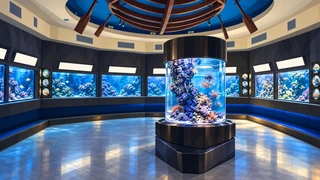
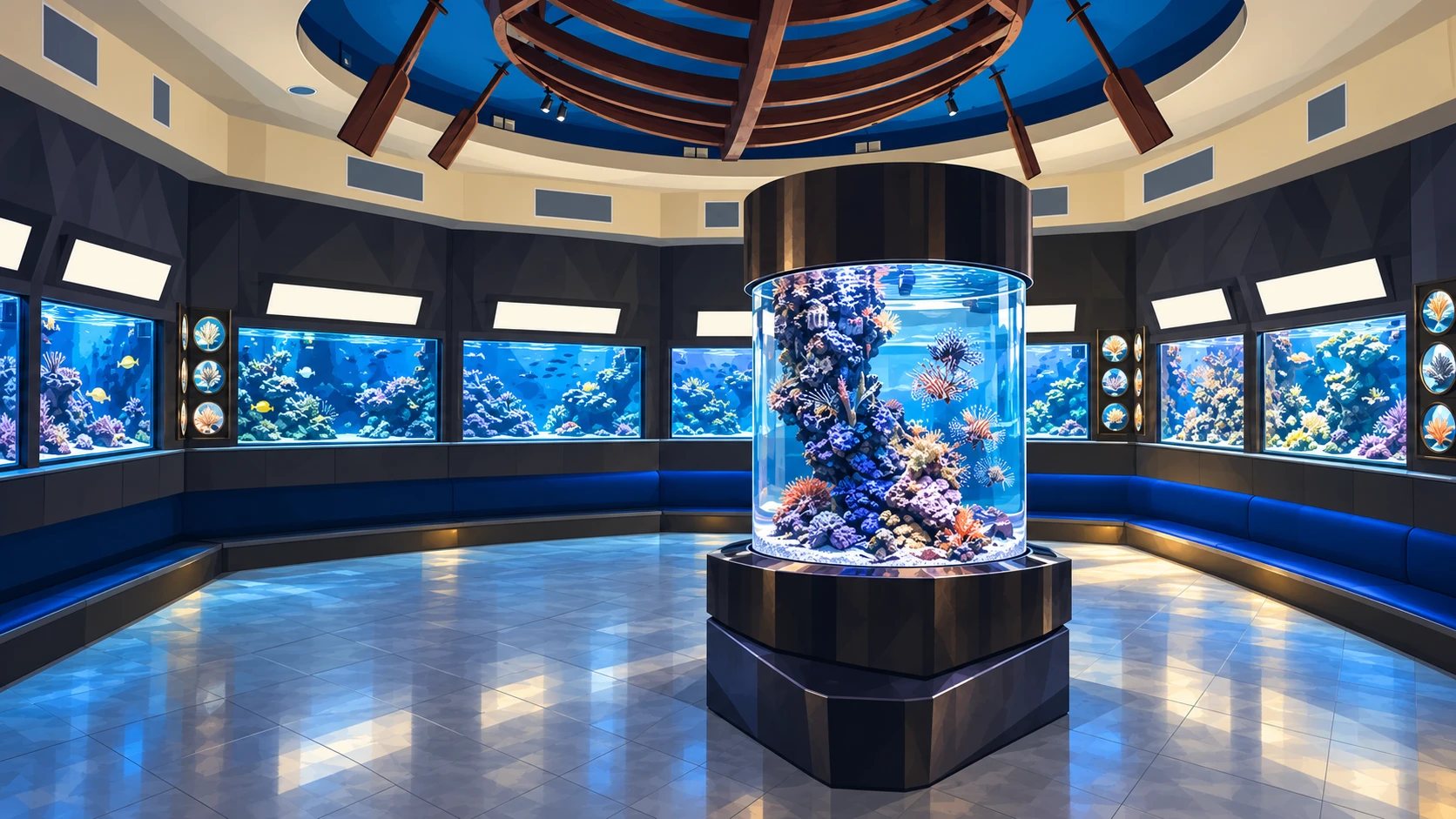
Water connects very different environments at Gdynia Aquarium. Some tanks house inhabitants of tropical rivers and coral reefs, while others hold animals from the cold Atlantic and the Baltic Sea. Part of the National Marine Fisheries Research Institute, the aquarium presents more than 200 species in eight rooms on five levels. Its building stands on the Southern Pier, surrounded by Gdańsk Bay.
The collection's history reaches back to research in Hel. The Marine Fisheries Laboratory was established there in 1921, and its collections opened to visitors in 1924. Moving to Gdynia and a new building constructed in 1938-1939 did not immediately bring an aquarium opening: the war interrupted preparations. The institution opened in 1971, initially as the Oceanographic Museum and Marine Aquarium. It adopted the name Gdynia Aquarium in 2003.
Watching the animals reveals different ways of breathing, obtaining food and caring for young. An archerfish shoots water at an insect, an axolotl retains larval gills after maturity, and a male lumpsucker guards eggs. Cold Seas, opened in 2024, has twelve tanks containing around 450,000 litres of water in total. This section explores environments geographically closer to Gdynia, yet equally different from life on land.
Pro děti
This building beside Gdańsk Bay brings together animals from very different waters. There are tropical reef fish, inhabitants of South American rivers and species living in cold seas. More than 200 species occupy eight rooms on five levels. The aquarium is part of a scientific institute that studies the sea.
Its story began before the building itself. In 1921, a laboratory studying the sea and fish opened in Hel. Three years later, visitors could see its collections. The institution then moved to Gdynia, but the war interrupted preparations for an aquarium. Visitors finally entered it in 1971. The present name was adopted in 2003.
Each animal handles aquatic life in its own way. Archerfish shoot insects down with water, axolotls have branching gills, and father lumpsuckers guard their eggs. In Cold Seas, opened in 2024, twelve tanks together hold about 450,000 litres of water. Here you can meet inhabitants of the Atlantic and Baltic before stepping outside to see the real bay again.
Pro koho a podmínky návštěvy
Nutný doprovod
Celé místo · 0-13 let
Children up to the age of 13 must be accompanied by an adult.
Novinky místa
Načítání novinek…
March
1. března – 31. března
- pondělí
- 10:00–17:00
- úterý
- 10:00–17:00
- středa
- 10:00–17:00
- čtvrtek
- 10:00–17:00
- pátek
- 10:00–17:00
- sobota
- 10:00–17:00
- neděle
- 10:00–17:00
April and May
1. dubna – 31. května
- pondělí
- 09:00–19:00
- úterý
- 09:00–19:00
- středa
- 09:00–19:00
- čtvrtek
- 09:00–19:00
- pátek
- 09:00–19:00
- sobota
- 09:00–19:00
- neděle
- 09:00–19:00
June
1. června – 30. června
- pondělí
- 09:00–20:00
- úterý
- 09:00–20:00
- středa
- 09:00–20:00
- čtvrtek
- 09:00–20:00
- pátek
- 09:00–20:00
- sobota
- 09:00–20:00
- neděle
- 09:00–20:00
July and August
1. července – 31. srpna
- pondělí
- 09:00–21:00
- úterý
- 09:00–21:00
- středa
- 09:00–21:00
- čtvrtek
- 09:00–21:00
- pátek
- 09:00–21:00
- sobota
- 09:00–21:00
- neděle
- 09:00–21:00
September
1. září – 30. září
- pondělí
- 09:00–19:00
- úterý
- 09:00–19:00
- středa
- 09:00–19:00
- čtvrtek
- 09:00–19:00
- pátek
- 09:00–19:00
- sobota
- 09:00–19:00
- neděle
- 09:00–19:00
October
1. října – 31. října
- pondělí
- 10:00–17:00
- úterý
- 10:00–17:00
- středa
- 10:00–17:00
- čtvrtek
- 10:00–17:00
- pátek
- 10:00–17:00
- sobota
- 10:00–17:00
- neděle
- 10:00–17:00
November-February
1. listopadu – 1. března
- pondělí
- Zavřeno
- úterý
- 10:00–17:00
- středa
- 10:00–17:00
- čtvrtek
- 10:00–17:00
- pátek
- 10:00–17:00
- sobota
- 10:00–17:00
- neděle
- 10:00–17:00
Výjimky
- 1. ledna 2026Closure day listed in the opening schedule.
- Zavřeno
- 1. listopadu 2026Closure day listed in the opening schedule.
- Zavřeno
- 24. prosince 2026Closure day listed in the opening schedule.
- Zavřeno
- 25. prosince 2026Closure day listed in the opening schedule.
- Zavřeno
- 31. prosince 2026Closure day listed in the opening schedule.
- Zavřeno
- 5. dubna 2026Closure day listed in the opening schedule.
- Zavřeno
- 1. ledna 2027Closure day listed in the opening schedule.
- Zavřeno
- 1. listopadu 2027Closure day listed in the opening schedule.
- Zavřeno
- 24. prosince 2027Closure day listed in the opening schedule.
- Zavřeno
- 25. prosince 2027Closure day listed in the opening schedule.
- Zavřeno
- 31. prosince 2027Closure day listed in the opening schedule.
- Zavřeno
- 28. března 2027Closure day listed in the opening schedule.
- Zavřeno
Closed on Mondays from November to February. Also closed on 1 November, 24 and 25 December, 31 December, 1 January and Easter Sunday. The ticket office and entrance close 30 minutes before the building.
1 May-31 August
- Standard admission
- 48,00 PLN
- Reduced admission
- 34,00 PLN
- Visitor with a disability
- 23,00 PLN
- Family 2+1
- 119,00 PLN
- Family 2+2
- 142,00 PLN
- Family 2+3
- 165,00 PLN
- Supplement for the fourth and each subsequent child
- 23,00 PLN
1 September-30 April
- Standard admission
- 43,00 PLN
- Reduced admission
- 30,00 PLN
- Visitor with a disability
- 21,00 PLN
- Family 2+1
- 107,00 PLN
- Family 2+2
- 128,00 PLN
- Family 2+3
- 149,00 PLN
- Supplement for the fourth and each subsequent child
- 21,00 PLN
All year
- Named annual pass
- 130,00 PLN
- Children before their fifth birthday
- zdarma
Reduced admission: children from their fifth birthday, school pupils, students up to 26, retirees and pensioners with proof of eligibility. Family tickets cover two adults and children aged 5-18; each fourth and subsequent child costs an extra PLN 23 from May to August or PLN 21 from September to April. Groups of more than 15: 10% discount in May and June, 20% from September to April; base prices are the same as individual tickets. One group leader per ten participants enters free. Free admission also applies to children under five, a disabled visitor’s carer, zoo employees and PTTK guides and tour leaders. Relevant documents and a free admission card are required. Named annual passes are valid for 365 days; collect an admission card and show the pass and ID on arrival. Friends of the Aquarium card: available after spending at least PLN 150 at the ticket office, giving 10% off later visits for two years; not valid for groups.
Koupit vstupenky Obraz vytvořený nebo podstatně upravený umělou inteligencí.Tematická trasaTen ways to live in waterFrom archerfish and axolotls through sharks, coral reefs and Amazonia to lumpsuckers and wolffish in Cold Seas.Začít prohlídku
Adresa
al. Jana Pawła II 181-345 Gdynia
One of the two lifts is temporarily out of service. The current plan starts on the third floor and proceeds downwards; follow signs and staff instructions. Adapted toilets, a parent-and-child room and a quiet room are on the ground floor. Properly identified assistance dogs are admitted with the required documents. Photograph live animals without flash or a tripod.