
Sál
Minerals of Poland
Lower Silesian deposits, former mines and regional specimens in a university collection.
Jazyk obsahu
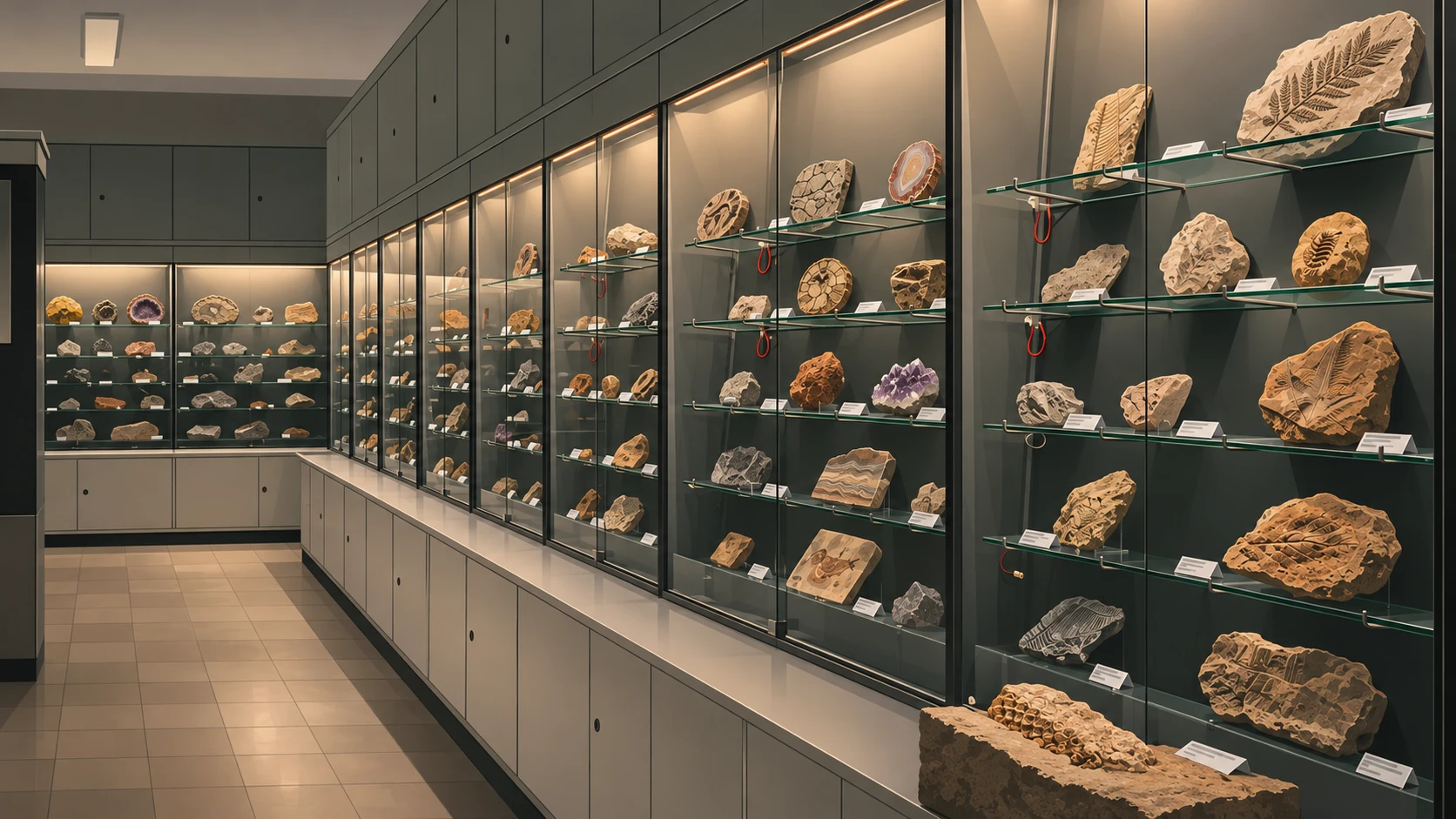
The Polish mineral collection arranges specimens by mineralogical classification and region of origin. Lower Silesia is particularly well represented. The material documents local deposits of copper, silver, arsenic, iron, tin and nickel ores, alongside barite, gypsum and anhydrite. Together they represent resources linking the region's geology with its mining history.
Some specimens come from deposits that are exhausted, abandoned or no longer exist. They therefore preserve evidence of former mineral sources. Such samples cannot simply be replaced with fresh material from the same working mine.
Minerals from the Strzegom pegmatites form an important group used as comparative material in scientific research. Regional specimens presented by the museum include nephrite from Jordanów Śląski, chrysoprase from Szklary and amethyst from Borówno. Agates represent localities including Nowy Kościół and Płóczki. These place names add a map of Lower Silesian mineral sites and former extraction areas to the collection's systematic arrangement.
Pro děti
This collection brings together minerals from Poland, especially Lower Silesia. Specimens are arranged by mineral type and where they were found. They include minerals associated with copper, silver and other metal deposits, as well as gypsum and barite.
Some samples come from mines that no longer operate or deposits that have been exhausted. They preserve a record of those places. Nephrite comes from Jordanów Śląski, chrysoprase from Szklary and amethyst from Borówno. Minerals from Strzegom help scientists compare specimens during research. A stone in a cabinet can also be useful scientific material.
Otázka 1 z 2
Where does the described nephrite come from?
- Umístění
- ul. Cybulskiego 32-34 · ul. Cybulskiego 32-34