
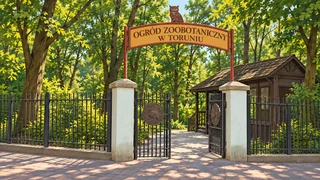
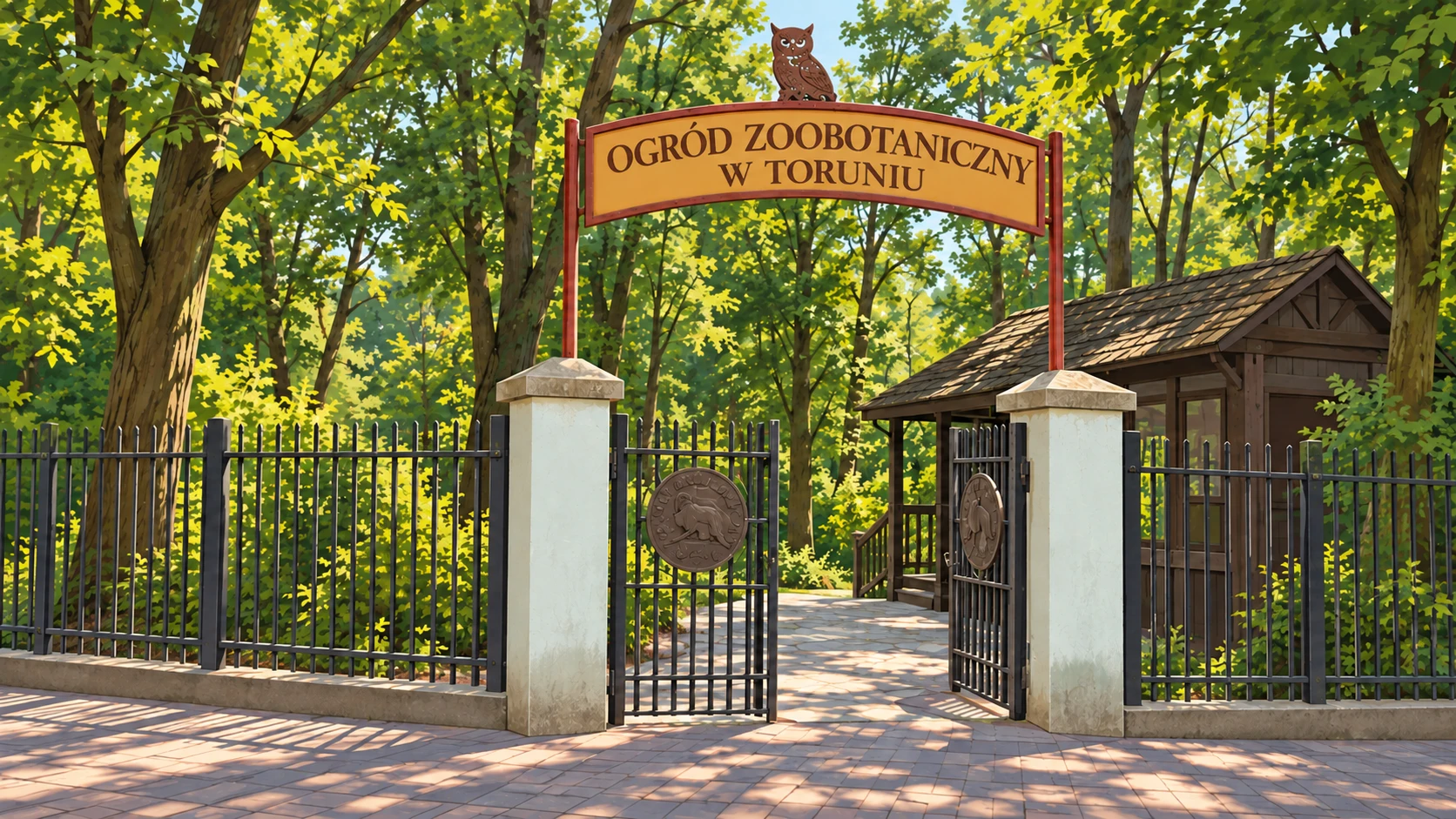
Toruń, kujawsko-pomorskie
Ogród Zoobotaniczny w Toruniu
Historic trees, animal enclosures, an aviary and a reptile house share a garden in Toruń’s Bydgoskie Przedmieście district.
Sledováním souhlasíte s e-mailovými a push oznámeními od tohoto místa. Každý kanál můžete vypnout v nastavení.
Jazyk obsahu
Ogród Zoobotaniczny w Toruniu
Toruń Zoobotanical Garden grew out of an earlier botanical garden. In 1797 the physician Johann Gottlieb Schultz bought the estate, managed its trees and brought in plants from different parts of Europe. Paths, bridges and pavilions formed a romantic park. Schultz left the property to Toruń’s secondary school for educational use; after his death in 1827, he was buried in the garden.
The animal collection began to develop in 1965. Enclosures and aviaries appeared over the following decades, and the garden opened to a wider public. Today, a walk leads between old trees, outdoor animal displays and indoor pavilions. The aviary, opened in 2002, combines exotic birds with greenery, while the reptile house occupies the Laegner Villa.
Red pandas, fishing cats, Mishmi takins and lemurs illustrate different ways of life: climbing, hunting in water, moving between mountain habitats and living in groups. The garden provides nature education and became a full member of the European Association of Zoos and Aquaria in 2009. Here, visitors can explore nature at two scales: the small details of an animal’s body and a park landscape with more than two centuries of history.
Pro děti
In this garden, animals live among trees with a long history. More than two hundred years ago, a doctor named Johann Gottlieb Schultz developed a garden of plants here. He wanted it to support learning, so he left it to a school in Toruń. The animal collection began to grow much later, in 1965.
Today you can meet red pandas, fishing cats, lemurs and takins. Some animals are excellent climbers; others swim or travel through mountains. Exotic birds live in the aviary, while the reptile house introduces another group of animals. Old trees are as much a part of the garden as its residents.
A walk is a chance to compare tails, paws, beaks and shells. Each helps an animal deal with its surroundings. Watch quietly from the paths, without frightening the animals or feeding them food you have brought along.
Pro koho a podmínky návštěvy
Nutný doprovod
Celé místo · 0-9 let
Children under 10 must be accompanied by an adult.
Novinky místa
Načítání novinek…
Winter
16. října – 1. března
- pondělí
- 10:00–16:00
- úterý
- 10:00–16:00
- středa
- 10:00–16:00
- čtvrtek
- 10:00–16:00
- pátek
- 10:00–16:00
- sobota
- 10:00–16:00
- neděle
- 10:00–16:00
1-15 March
1. března – 15. března
- pondělí
- 10:00–16:00
- úterý
- 10:00–16:00
- středa
- 10:00–16:00
- čtvrtek
- 10:00–16:00
- pátek
- 10:00–16:00
- sobota
- 10:00–17:00
- neděle
- 10:00–17:00
Spring
16. března – 30. dubna
- pondělí
- 10:00–18:00
- úterý
- 10:00–18:00
- středa
- 10:00–18:00
- čtvrtek
- 10:00–18:00
- pátek
- 10:00–18:00
- sobota
- 10:00–18:00
- neděle
- 10:00–18:00
Summer
1. května – 31. srpna
- pondělí
- 10:00–19:00
- úterý
- 10:00–19:00
- středa
- 10:00–19:00
- čtvrtek
- 10:00–19:00
- pátek
- 10:00–19:00
- sobota
- 10:00–19:00
- neděle
- 10:00–19:00
Early autumn
1. září – 15. října
- pondělí
- 10:00–18:00
- úterý
- 10:00–18:00
- středa
- 10:00–18:00
- čtvrtek
- 10:00–18:00
- pátek
- 10:00–18:00
- sobota
- 10:00–18:00
- neděle
- 10:00–18:00
The garden opens daily, including public holidays. Aviary: May-August 10:00-18:00; 16 March-30 April and 1 September-15 October 10:00-17:30; 16 October-15 March 10:00-15:30, except weekends on 1-15 March: 10:00-16:30. The ticket office closes 30 minutes before the garden closes.
Admission: April-October 2026
- Standard
- 27,00 PLN
- Reduced
- 20,00 PLN
- Special
- 2,00 PLN
Prices apply from 1 April to 31 October 2026. Pay at the ticket office by cash or card. See the garden tariff for full concession eligibility.
 Obraz vytvořený nebo podstatně upravený umělou inteligencí.Tematická trasaTen ways of lifeFrom red panda to takin: trees, wetlands, underground shelters and mountain journeys.Začít prohlídku
Adresa
ul. Bydgoska 787-100 Toruń
Main entrance from Bydgoska Street. Access from Rybaki Street for visitors with access needs requires advance telephone contact.
Poloha
Entrance steps and ramps still require adaptation. Access from Rybaki Street can be arranged by telephone. An accessible toilet is available April-October; outside this season, aviary staff provide access to the toilet in the administration building. The ticket office has a hearing loop. Audio information, Braille and YourWay are available in the garden. Assistance dogs are permitted except in the Herpetarium and Aviary. There is no visitor car park; visitors with access needs may arrange use of staff parking.