
Lubiąż, dolnośląskie
Opactwo Cysterskie w Lubiążu
Baroque halls, a Gothic church and the extensive buildings of a former abbey beside the Oder. Lubiąż combines Cistercian history, Willmann’s art and decades of conservation.
Sledováním souhlasíte s e-mailovými a push oznámeními od tohoto místa. Každý kanál můžete vypnout v nastavení.
Jazyk obsahu
Opactwo Cysterskie w Lubiążu
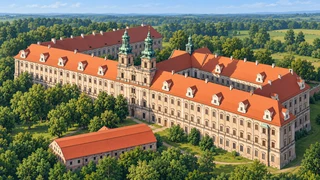
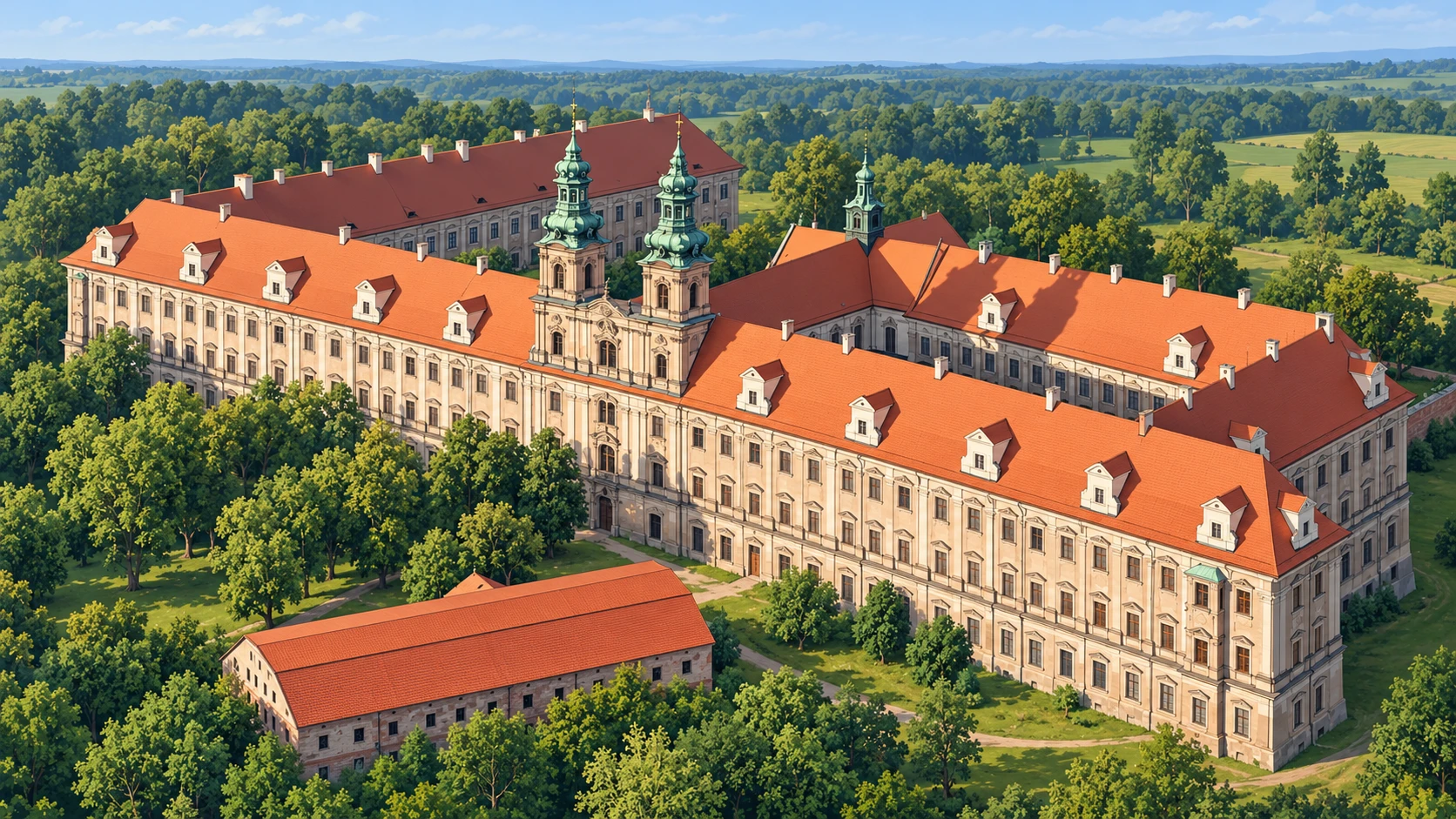
Behind the long façade at Lubiąż lie three parts of the former abbey: the Abbots’ Palace, the church and the monastery. The 223-metre shared elevation announces the scale of a complex expanded by the Cistercians over centuries. Duke Bolesław I the Tall brought the monks from Pforta in 1163. The great Baroque rebuilding of 1681-1739 added new buildings and decorated ceremonial interiors.
Paintings by Michael Willmann survive in the Abbot’s Dining Room, while the Ducal Hall combines Christian Bentum’s paintings with sculpture and stuccowork. The Summer Refectory, the monks’ former dining hall, received paintings by Felix Anton Scheffler. The Gothic Church of the Virgin Mary, a burial place of the Silesian Piasts, also reveals losses: its rich Baroque furnishings were dispersed. These four interiors form the regular visiting programme. The library, attics and cellars open on special occasions, through separately announced programmes.
The dissolution of 1810 ended Cistercian life in Lubiąż. The buildings were later used for purposes including a hospital and, after the war, storage. The Lubiąż Foundation, registered in 1989, undertook the rescue of the complex. The restored rooms are part of an extensive monument where conservation continues. Around the monastery square, the Marian Column, the Church of St James and service buildings complete the historic layout.
Source of information: Lubiąż Foundation.
Pro děti
An abbey is a monastery led by an abbot. The Cistercians lived in Lubiąż after Duke Bolesław I the Tall brought them here in 1163. Many years later, a huge Abbots’ Palace and new monastery wings were built. Their long façade joins the church.
The rooms inside had different jobs. The abbot ate in his own dining room, the monks gathered for meals in the refectory, and the Ducal Hall was a ceremonial space. Different artists decorated them: Michael Willmann, Christian Bentum and Felix Anton Scheffler. The Church of the Virgin Mary was a place of prayer and burial for Silesian dukes. These four interiors are seen during regular visits. The library, attics and cellars open for specially announced events.
Monastic life ended here in 1810. The buildings took on other uses, including hospital wards and storage. Many old decorations were lost or taken away. Since 1989 the Lubiąż Foundation has worked to save the complex. The restored rooms and continuing work show how large that task is.
Novinky místa
Načítání novinek…
April-September
1. dubna – 30. září
- pondělí
- 10:00–17:00
- úterý
- 10:00–17:00
- středa
- 10:00–17:00
- čtvrtek
- 10:00–17:00
- pátek
- 10:00–17:00
- sobota
- 10:00–17:00
- neděle
- 10:00–17:00
October-March
1. října – 31. března
- pondělí
- 10:00–15:00
- úterý
- 10:00–15:00
- středa
- 10:00–15:00
- čtvrtek
- 10:00–15:00
- pátek
- 10:00–15:00
- sobota
- 10:00–15:00
- neděle
- 10:00–15:00
Visits run daily, only in guided groups, on the hour. A regular visit lasts about an hour. Last admission is at 16:00 in summer and 14:00 in winter. Bookings are for groups of at least 20 people. The library, attics and cellars open only for special programmes. The abbey may be temporarily closed to visitors, including for filming. Before your visit, check the latest announcements on the Lubiąż Foundation website: https://fundacjalubiaz.org.pl/.
Regular guided tour
- Standard ticket
- 40,00 PLN
- Concession ticket
- 30,00 PLN
Guide included in the ticket price. Cash only. Concessions: retirees, pensioners, school-age children, students up to 26 years of age and groups of more than 20 people. Special events have separate programmes and prices.
Adresa
Plac Klasztorny 156-100 Lubiąż
The building is unheated; warm clothing is needed in winter and spring. Stay with the group and follow the guide’s instructions. Animals are not allowed, except guide dogs. Conditions for attic and cellar visits are set out in the special visiting programmes.