
Zajímavé místo
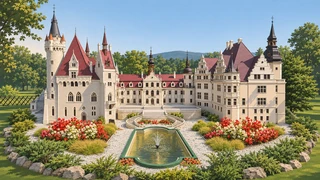
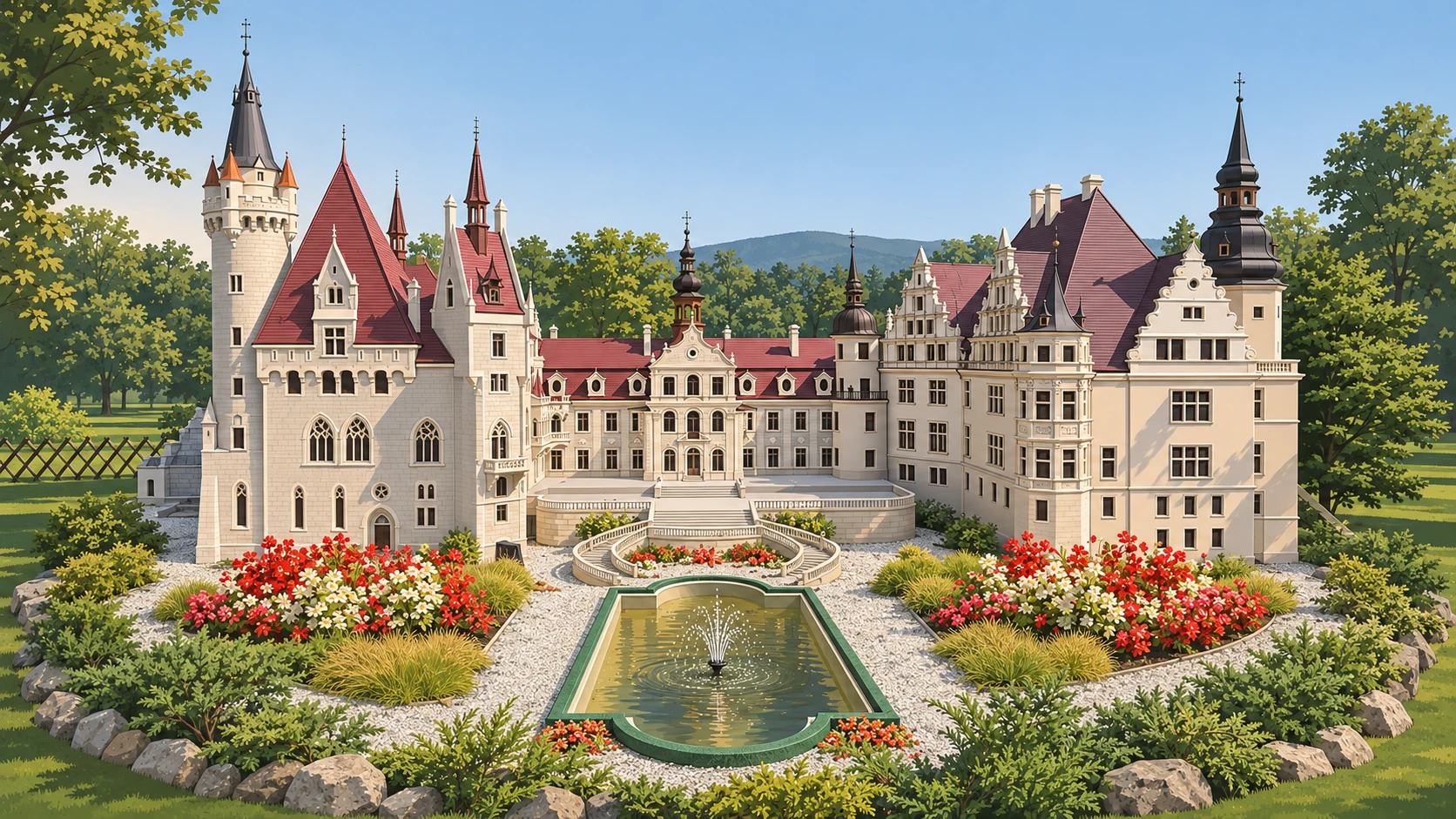
Model of Czocha Castle
A fortress above the Kwisa transformed into a romantic residence.
Jazyk obsahu
Czocha Castle stands on a rocky peninsula beside Lake Leśniańskie, where the Kwisa cuts through the landscape. The model represents a complex shaped by a medieval fortress, later additions and reconstruction. A tall cylindrical tower rises above the buildings. In the 16th century, the Nostitz family enlarged the castle in Renaissance style. New residential buildings were attached to the older core. In 1611, a bridge was built across the dry moat between the outer ward and the castle.
Ernst Friedrich Gütschow bought Czocha in 1909. He commissioned Bodo Ebhardt to remodel it. The work, undertaken in 1910-1914, gave the residence its romantic Gothic and Renaissance character. Some earlier elements were reconstructed and others adapted to the owner’s vision. After 1945, the castle became a military holiday centre. The model in Kowary introduces a building whose medieval origins do not mean that every visible part dates from the Middle Ages.
Pro děti
The model of Czocha represents a castle beside the Kwisa River and Lake Leśniańskie. It has a tall round tower and buildings enlarged by successive owners. New residential parts were added in the 16th century. Later, a bridge across a dry moat connected the castle with its outer ward.
Ernst Friedrich Gütschow bought it in 1909. Architect Bodo Ebhardt remodelled the old fortress for him, giving it the appearance of a romantic residence inspired by Gothic and Renaissance architecture. Its different parts therefore vary greatly in age. After the Second World War, it became a military holiday centre. The miniature represents a building used for defence, as a home and later for leisure.
Otázka 1 z 2