
Raum · 1777-1867
The self-sufficient garrison
Food, fuel, ammunition and workshops: facilities prepared for thousands of soldiers and a lengthy siege.
Inhaltssprache
The planned wartime garrison numbered 3,756 soldiers. If necessary, the fortress was intended to accommodate as many as five thousand. These figures describe its projected wartime strength, not the permanent population of the barracks throughout their history.
The fortress armament comprised 264 guns, howitzers and mortars. Stores held ammunition, food and fuel, with provisions intended to last at least three months under siege. Each resource served a different need: maintaining fire, feeding the troops or sustaining everyday life without deliveries.
The supporting facilities included a bakery, brewery and craft workshops. There were also an armoury, powder magazine and military hospital. Animals were kept within the fortifications. This range of rooms and activities required considerably more space than firing positions alone.
The garrison also had a chapel and a prison. Alongside combat requirements came religious needs, medical care and the demands of military discipline. Casemates housed people, stores and equipment needed for daily service. Here, self-sufficiency meant preparing to be cut off from the surrounding area for a defined period, not having an inexhaustible supply of provisions.
Frage 1 von 2
How many soldiers did the standard wartime garrison plan provide for?
- Standort
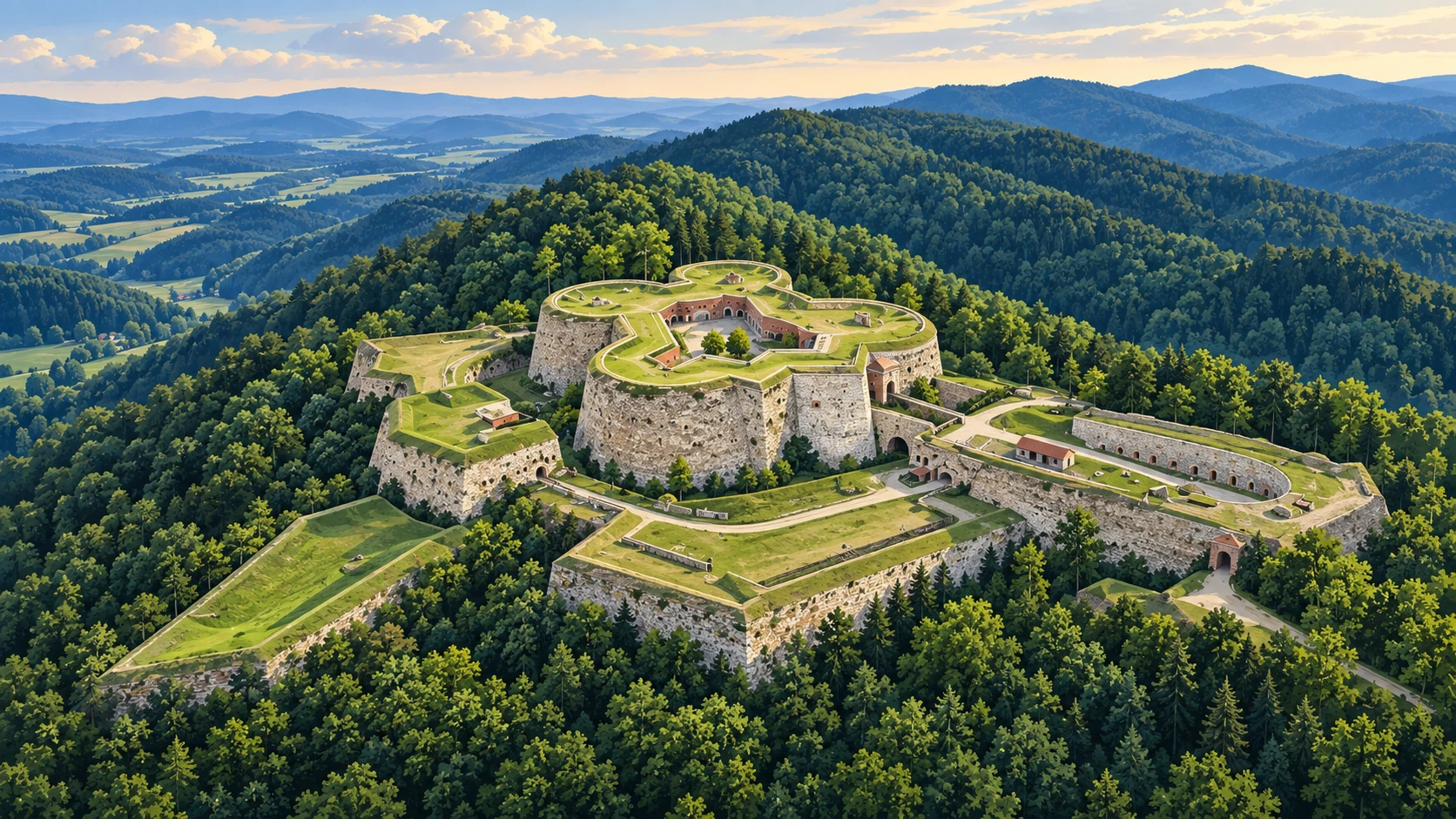
- Donjon on Warowna Góra. The pin marks the building as a reference for the story, not a particular room or well. · Donjon · Donjon
- Urheber oder Herkunft
- Prusy, XVIII wiek
- Signatur
- PKT-TSG-04
- garrison
- self-sufficiency
- brewery
- hospital
- armament