
Animal
Asian elephant
The trunk grasps, smells and sprays water, while females organise their lives around a family group.
Langue du contenu
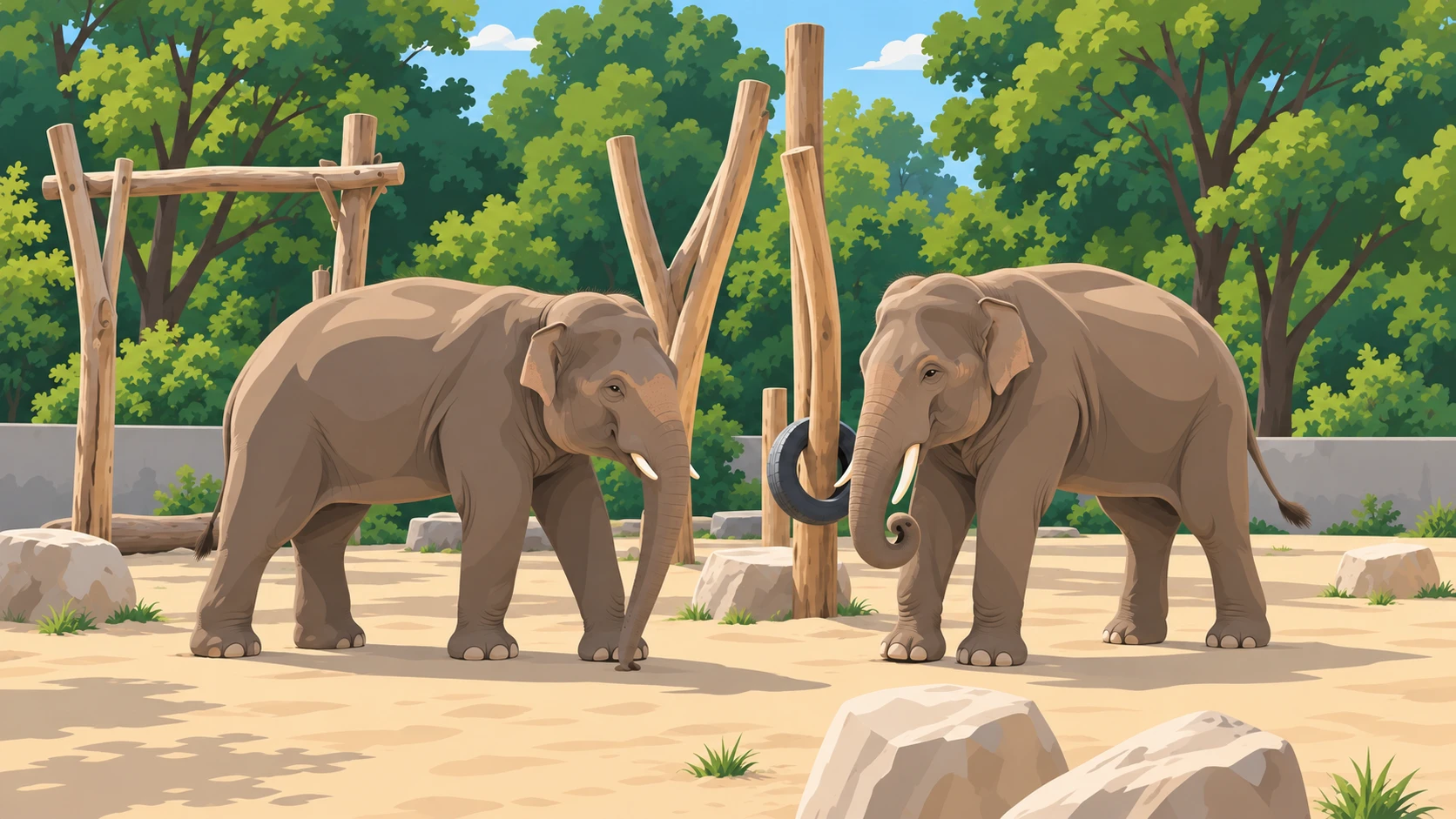
An elephant's trunk combines its nose and upper lip. It can lift food, investigate smells and spray water over the body. In the Asian elephant, the tip has a single grasping projection. Noticeably smaller ears are another feature distinguishing it from African elephants. The large body rests on pillar-like legs, and the broad feet contain a cushioning layer that absorbs pressure while walking.
Asian elephants naturally occur in southern and southeastern Asia. They live in a range of environments, from forests to open grassland. Their food includes grasses, leaves, branches, bark, roots and fruit. They swim well and readily take mud baths. Daily journeys therefore connect the search for plant food with access to water.
Females and their young form female-led family groups. Males more often live separately or in smaller groups. This social arrangement differs from the solitary lives of many large mammals. Habitat loss and fragmentation restrict the space elephants need, while entering cultivated fields brings conflict with people. Maintaining connections between natural areas matters for an animal whose life requires regular movement.
Pour les enfants
An elephant has an extraordinary nose: its trunk developed from the nose and upper lip. It uses it to smell, pick up food and spray itself with water. The Asian elephant has one small projection at the tip to help it grasp things. Its ears are smaller than those of African elephants.
Wild elephants of this species live in Asia. They eat grasses, leaves, branches, bark and fruit. They swim well and enjoy bathing in mud too.
Females and their youngsters form family groups. Males often live separately. A family needs plenty of space, plants and water. When fields and buildings appear between patches of forest, elephants find it harder to travel. Searching for food can then bring them into contact with people and lead them to damage crops.
Question 1 sur 2
Which body parts formed an elephant’s trunk?
- Emplacement
- Enclosure marked with the animal’s name within the zoo