
Point d’intérêt · 1764-1777
Built on the orders of Frederick the Great
Twelve years of work, thousands of labourers and forts built in stages along the rocky ridges of the Sudetes.
Langue du contenu
Frederick the Great approved the fortress plan on 29 April 1765. It was prepared by Ludwig Wilhelm Regeler, who had received the commission a year earlier. The main construction period ran from 1765 to 1777, twelve years in all. These dates cover an entire defensive complex, not a single building.
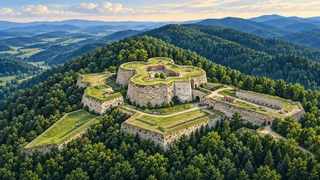
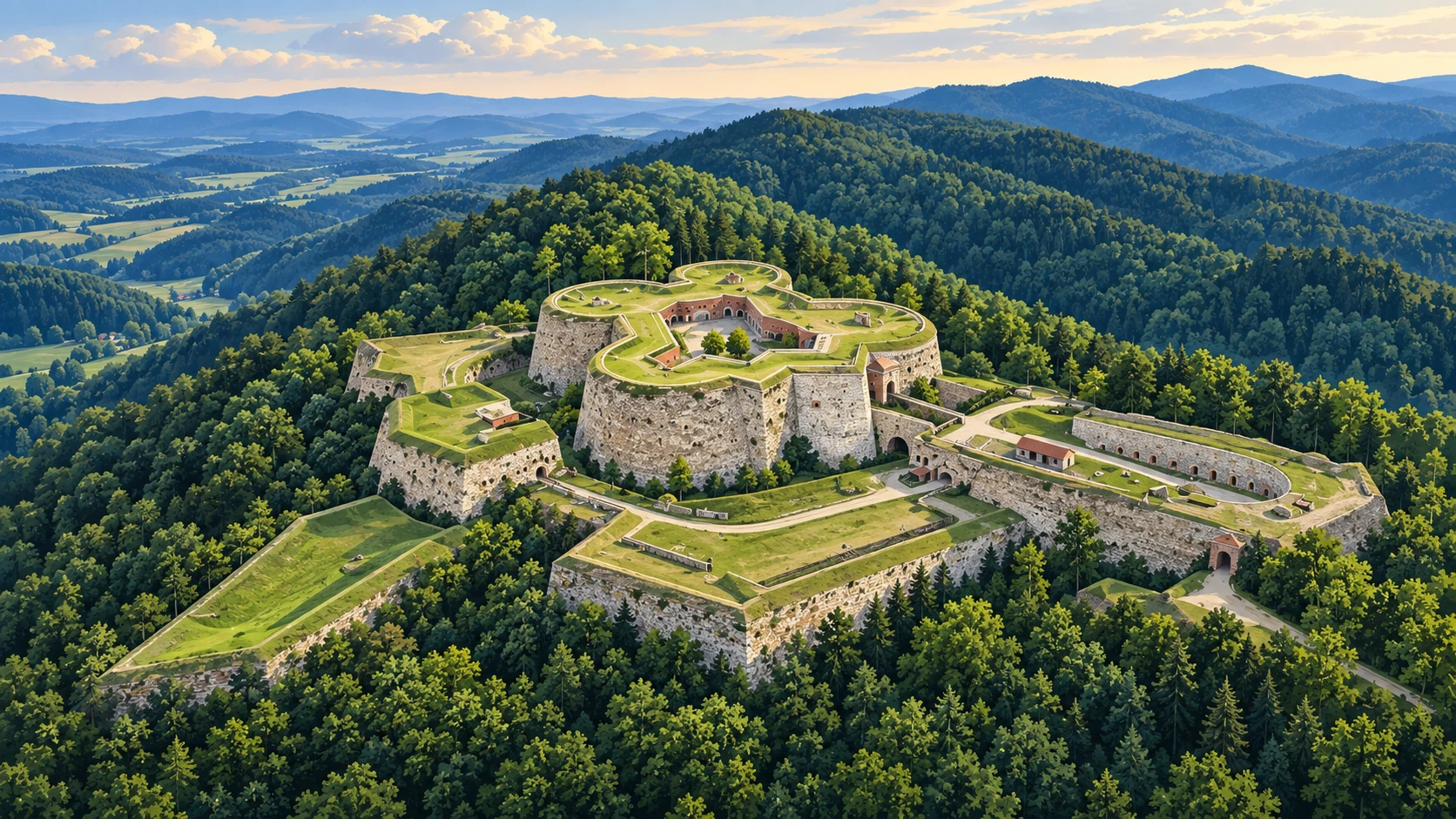
The donjon, counterscarp gallery and bastions protecting the centre came first. Forts Rogowy, Wysoka Skała and Ostróg followed. The Chochoły defences and barracks were developed later. Work on the different parts overlapped.
An average of around four thousand labourers from western Germany and Bohemia worked on the site. Local people were also forced to provide transport and labour. The project required its own supporting infrastructure: a sawmill, brickworks and lime kilns, together with a water supply and roads for carrying materials.
The walls were built from locally quarried stone. Brick was used to finish the casemates and courtyard walls, while light and red sandstone formed corners, edges and gutters. These changes in material reveal the builders' division of work: the massive structure and the more carefully finished details served different purposes.
Question 1 sur 2
Who approved the fortress plan in 1765?
- Emplacement
- Donjon on Warowna Góra. The pin marks the building as a reference for the story, not a particular room or well. · Donjon · Fortress history
- Auteur ou origine
- Prusy, XVIII wiek
- Numéro d’inventaire
- PKT-TSG-01
- Frederick the Great
- Ludwig Wilhelm Regeler
- fortress construction
- Prussia
- fortress history