
Állat
Pygmy hippopotamus
A solitary inhabitant of West African forests, active mainly at night.
A tartalom nyelve
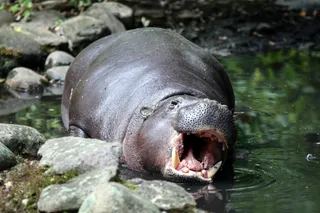
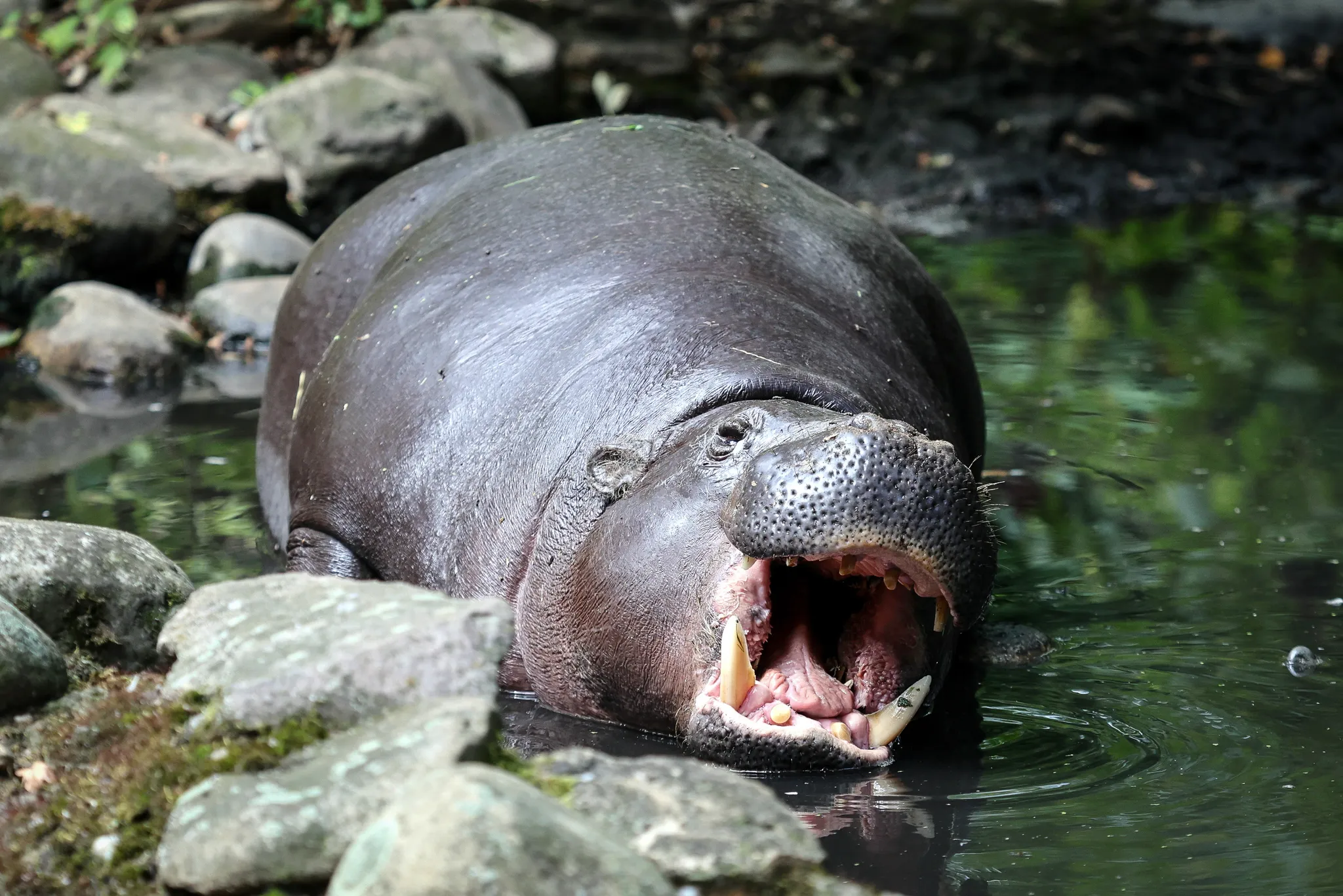
The pygmy hippopotamus is associated with the forests of West Africa, especially Liberia and neighbouring countries. It is more than a scaled-down common hippo. It has proportionally longer legs and neck, a narrower head and eyes placed farther to the sides. Its toes have less webbing, and its body suits a life in which land plays a larger part.
In the wild it is generally solitary and mainly active at night. During the day it rests hidden in wetlands, muddy hollows or water. After dark it searches for plant food on the forest floor. It is a herbivore, with leaves and fruit forming part of its diet.
Water helps protect its sensitive skin from drying out. Its ears and nostrils can close when it goes underwater. The skin releases a pinkish fluid that gives it a sheen and helps protect it from the sun. The term blood sweat can be misleading: the secretion's appearance does not mean the animal is injured.
A female usually gives birth to one calf on land. At first she hides it in vegetation while she feeds. Forests provide shelter as well as food; clearing them and hunting are among the threats facing this rare hippo.
Gyerekeknek
The pygmy hippo lives in the forests of West Africa. It is smaller than the common hippo, but its body is different in other ways too. It has longer legs for its body size, a narrower head and less webbing between its toes. It can spend more time on land.
This plant-eater usually looks for food at night. Its meals include leaves and fruit. During the day it rests in hiding, in wetlands or water. It usually lives alone. When it dives, it closes its ears and nostrils to keep water out.
Its skin needs protection from drying out and from the sun. It produces a pinkish fluid that makes the skin look wet and shiny. A mother usually has one calf on land. When she goes to feed, she leaves it hidden among plants. A safe forest is therefore important for both the adult and the young hippo.
Kérdés: 1/2
When does a pygmy hippo usually go out to feed?
- Elhelyezkedés
- Enclosure no. 46 on the Zoo Opole map.