
Állat
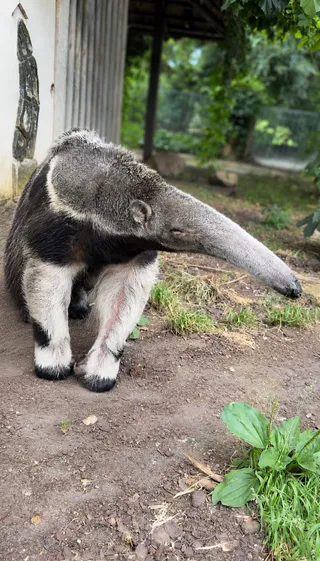
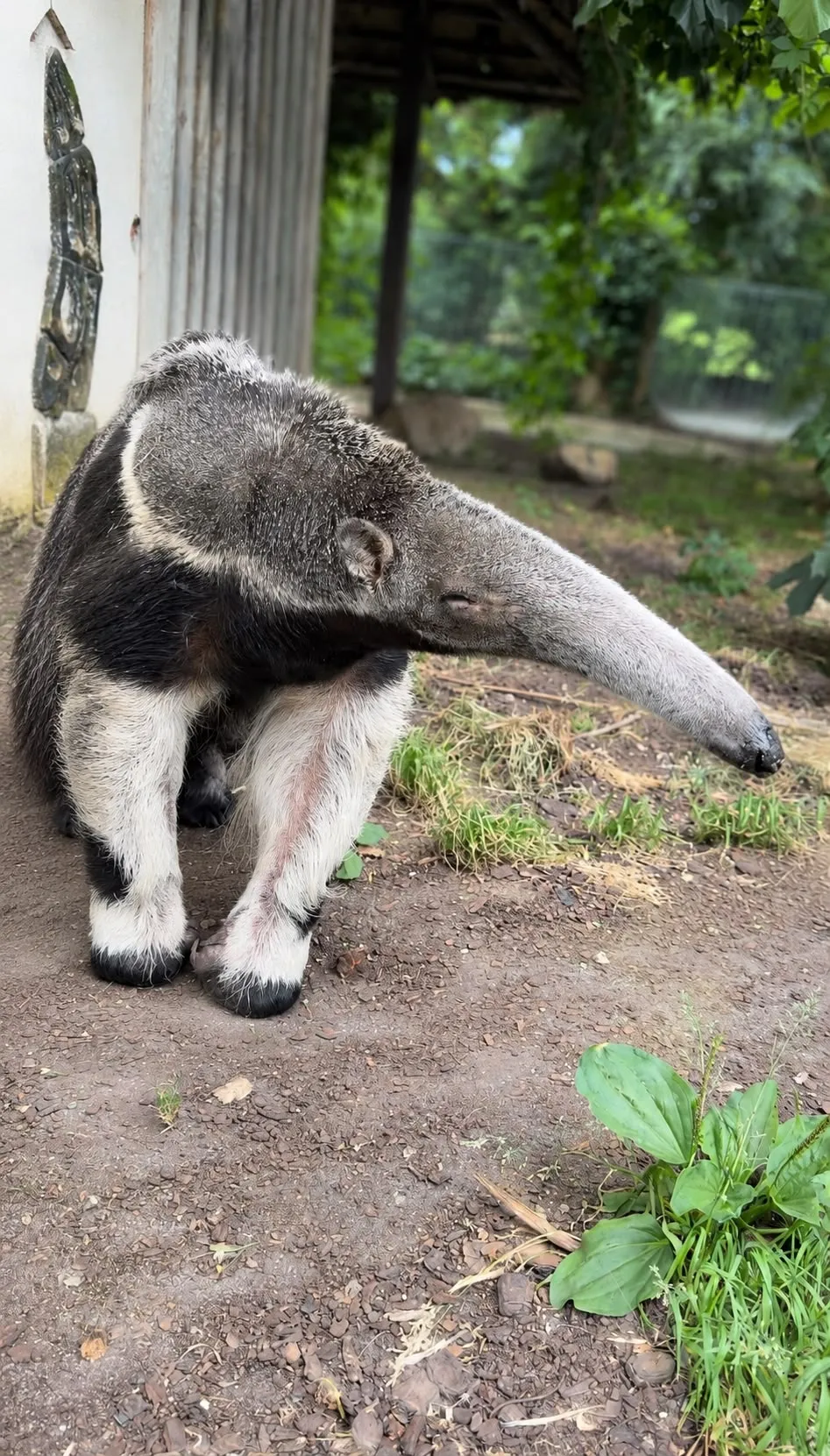
Giant anteater
A long snout and sticky tongue help gather thousands of tiny insects.
A tartalom nyelve
An anteater's long snout conceals a tool quite unlike a predator's teeth: anteaters have no teeth. They collect food with a long tongue coated in sticky saliva and tiny backward-pointing projections. The tongue can reach far beyond the mouth and enter the narrow passages occupied by insects.
Ants and termites form the main diet. Strong claws on the front feet open their nests, while a well-developed sense of smell helps locate food. An anteater usually feeds at one nest briefly before moving on. A meal therefore involves many successive visits rather than a long stay in one place.
On the ground it walks with its front claws folded underneath its feet. This protects them from wear, as the same claws must tear into the hard walls of ant nests and termite mounds. Its natural habitats include forests and grassy savannas in Central and South America.
Adult anteaters generally live alone. A female usually gives birth to one young, which travels on her back. The dark stripe on the youngster aligns with its mother's stripe, making the passenger harder to see. The adult's thick tail can cover its body during rest, rather like a spread-out blanket.
Gyerekeknek
An anteater needs no teeth for its insect meals. It has a long, sticky tongue that gathers ants and termites from narrow passages. First it tears their nest open with strong claws. After feeding briefly, it usually moves on to another place with food.
A good sense of smell helps with the search. When walking, it folds its front claws under its feet so they do not wear down against the ground. They need to remain useful for opening hard ant nests. Anteaters live in forests and grassy areas of Central and South America.
The mother carries her baby on her back. Their dark fur stripes line up, making the small passenger harder to notice. An adult anteater usually travels alone. When it rests, it can cover its body with its large, shaggy tail. That tail has a different job from the tongue or claws.
Kérdés: 1/2
What does an anteater use to gather insects from nest passages?
- Elhelyezkedés
- Enclosure no. 24 on the Zoo Opole map.