
Animale
Okapi
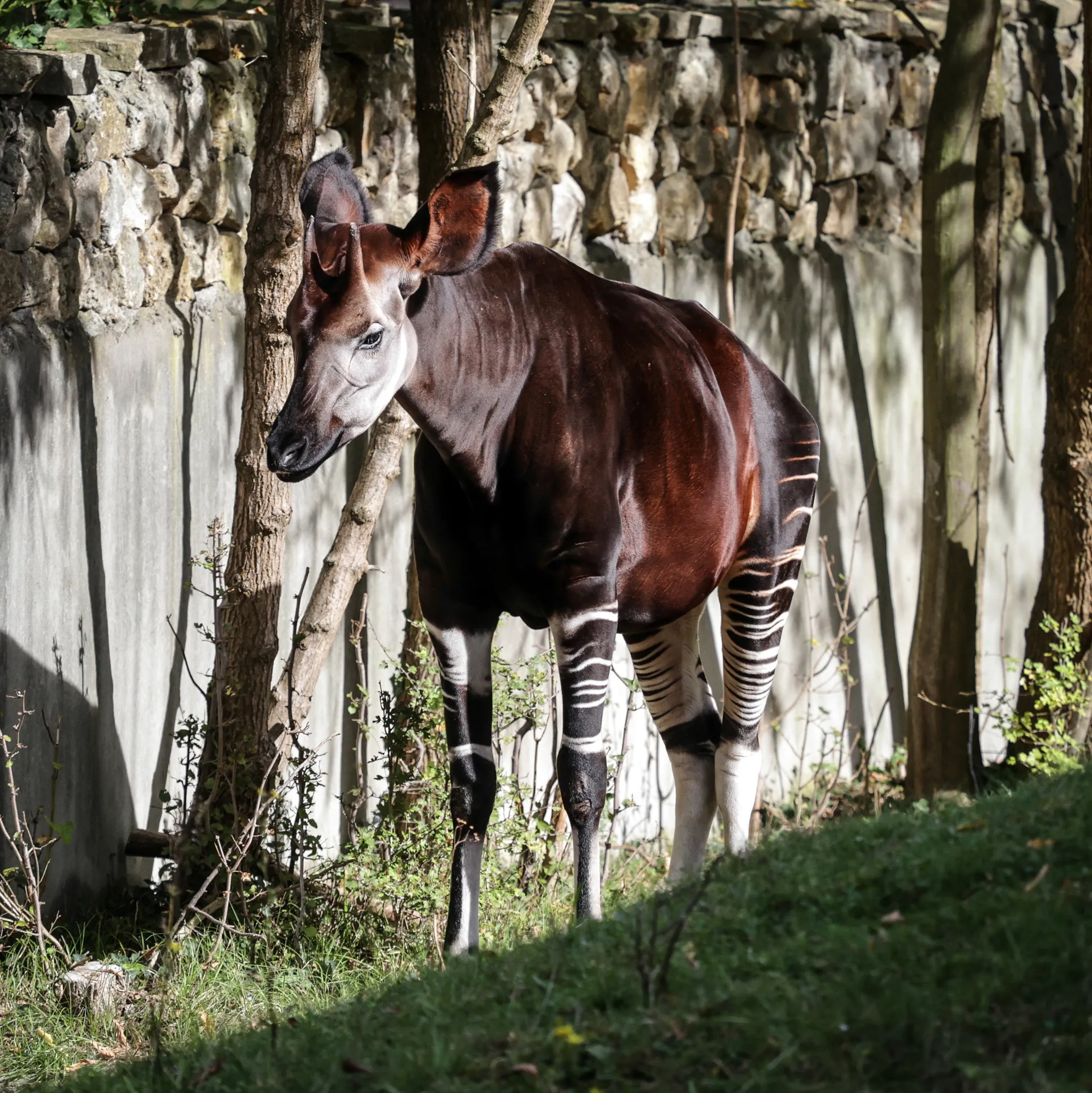
Its striped legs resemble a zebra’s, but the okapi is a relative of the giraffe adapted to dense rainforest.
Lingua dei contenuti
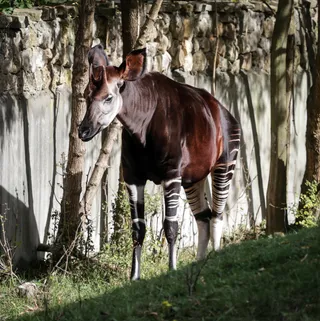
An okapi has white stripes on its legs and rump, but its closest living relatives are giraffes. A shorter neck and shorter legs suit life in dense vegetation. Large, mobile ears pick up quiet sounds, while a long, dark tongue grasps leaves and buds. The animal also uses its tongue to groom its coat.
Okapis naturally inhabit the rainforests of the Democratic Republic of the Congo, in the northeastern part of the country. Their stripes help conceal the body among shifting patches of light and shade. A dense, oily coat sheds water. These are practical adaptations to a wet forest, where caution and acute hearing help reveal approaching danger at an early stage.
Okapis usually live alone, with a mother caring for her calf as a clear exception. They eat leaves, buds, fruit and other plant material. Like giraffes, they are ruminants. Glands on their feet leave scent trails that other okapis detect by smell. Such a signal remains along a path even after its owner has disappeared among the trees. Hunting and forest loss reduce the living space available to this shy mammal.
Per bambini
The stripes on an okapi’s legs might make you think of a zebra. Yet its relative is the giraffe. The okapi has a shorter neck and lives in the dense forests of the Democratic Republic of the Congo. Its large ears help it hear an approaching animal before it sees it between the trees.
A long, dark tongue grasps leaves and buds. The okapi also eats fruit and other plant material. Its tongue even helps groom its coat. Stripes help hide it among patches of light and shade, while rain runs off its oily fur.
An okapi usually travels alone. A mother, however, stays with her calf and looks after it. Glands on the animals’ feet leave scent marks on the ground. Another okapi can smell them. A message can therefore remain on a forest path after its sender has gone out of sight.
Domanda 1 di 2
Which animal is the okapi most closely related to?
- Posizione
- Enclosure no. 48 on the Zoo Opole map.