
Sála
Holotypes and Early Mineral Discoveries
Reference specimens and mineral research associated with the Wrocław collection.
Jazyk obsahu
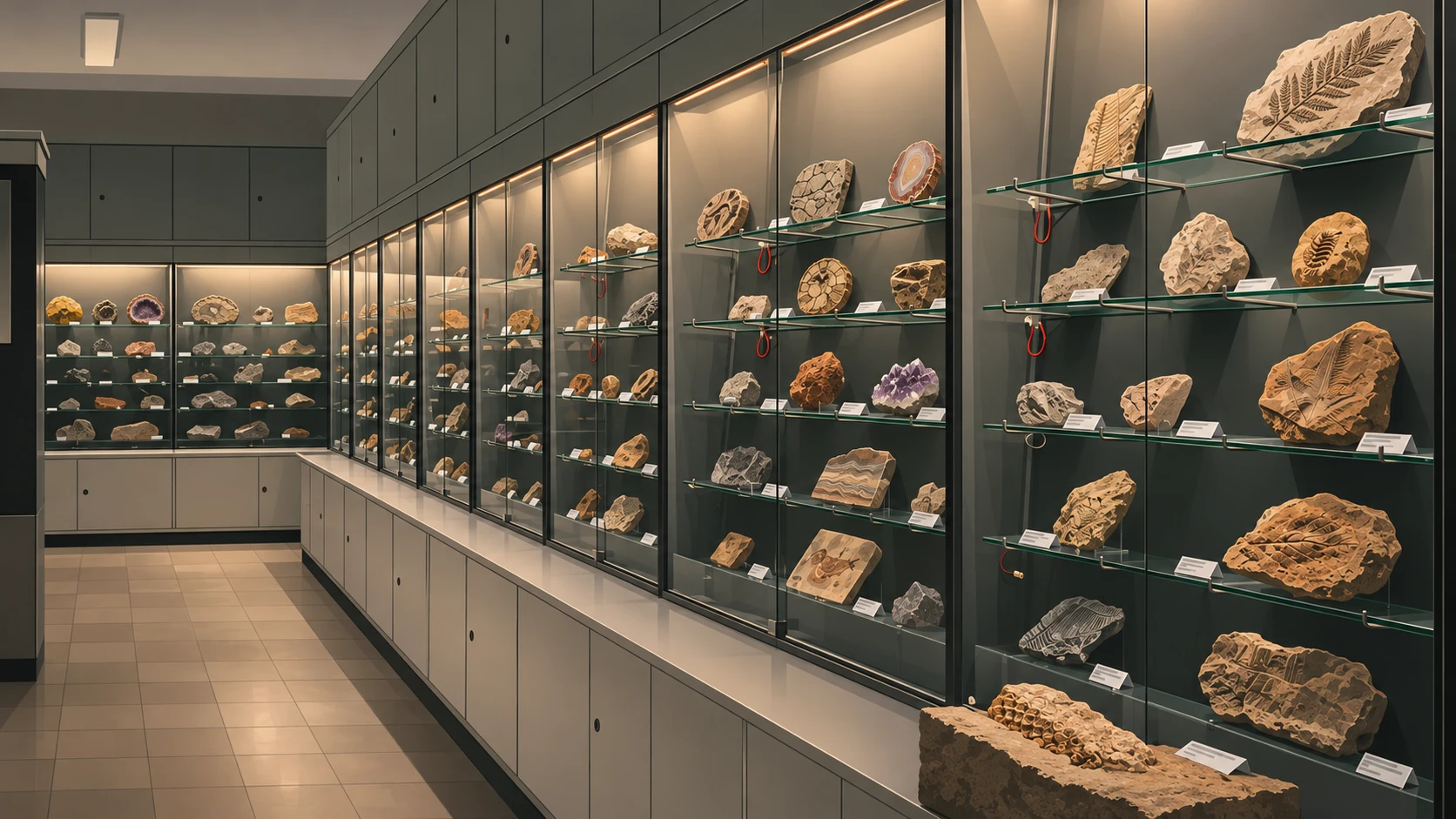
A holotype is the specimen on which the description of a new mineral was based. Such samples have special scientific importance as reference material for naming and identifying a mineral. The Wrocław collection connects them with researchers who studied university specimens and minerals from different localities.
Aerinite and ardennite are associated with the work of Arnold von Lasaulx. Martin Websky studied sarcopside from Michałkowa in the Owl Mountains. The history of these names leads to specific samples and their origins, as well as to the scientists themselves.
Another strand concerns prasiolite, a green variety of quartz. In 1992 Michał Sachanbiński and Piotr Wróblewski published research on natural prasiolite from Suszyna-Mrówieniec. Their work also involved old museum material. Early prasiolite specimens from Płóczki, donated by Jarosław Kosałka, joined the collection as well. The connection between older samples and later research explains why preserving specimens matters long after they have been collected.
Pre deti
A holotype is a special specimen used by scientists when they first describe a new mineral. Later researchers can compare their finds with it. That is why these samples are carefully preserved.
The Wrocław collection is connected with research on aerinite, ardennite and sarcopside. The last comes from Michałkowa in the Owl Mountains. There is also a story about prasiolite, a green variety of quartz. Researchers described natural prasiolite from Suszyna-Mrówieniec, and specimens from Płóczki also entered the collection. Old museum samples can help with new discoveries.
Otázka 1 z 2
What is the role of a holotype?
- Poloha
- ul. Kuźnicza 22 · ul. Kuźnicza 22