
Sála
Meteorites
Historic finds from space, arranged by composition and origin.
Jazyk obsahu
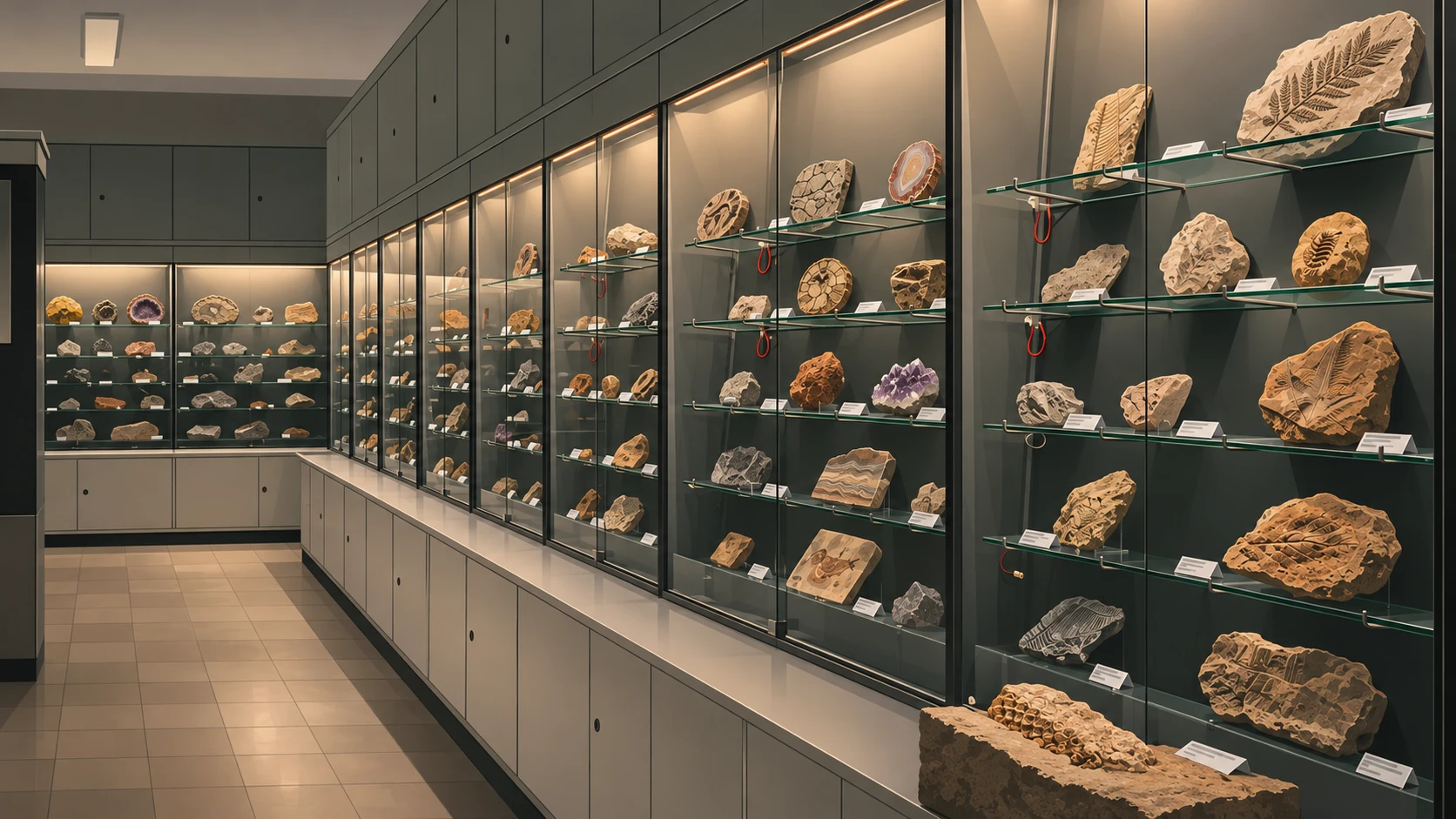
A meteorite is a fragment of interplanetary matter that survived its passage through the atmosphere and reached the Earth's surface. The museum collection contains more than 160 objects, a selection of which is shown in the meteorite room. The display separates iron, stony-iron and stony meteorites according to their basic classification.
Meteorites found in Poland are presented separately. The collection includes specimens associated with Piława, Przełazy and Sulechów. A find's origin is therefore as important as the material it contains. Some Polish meteorites represent historic finds preserved in the university collection.
Particularly valued objects include the Orgueil carbonaceous chondrite, from a fall in France in 1864. Another historic specimen is associated with Krasnoyarsk in Siberia and the iron brought back by Peter Simon Pallas in 1772. Donors have also helped expand the collection; Tomasz Jakubowski contributed specimens in recent years. The cabinets bring older finds together with later museum acquisitions.
Pre deti
A meteorite is a piece of matter from space that has reached the Earth's surface. The museum has more than 160 such objects. Selected specimens are shown in the exhibition room, divided into iron, stony-iron and stony meteorites.
Finds from Poland form a separate group, including those from Piława, Przełazy and Sulechów. A specimen called Orgueil fell in France in 1864. Another is associated with material brought from Siberia by Pallas in 1772. Gifts have continued to enrich the collection, including specimens donated by Tomasz Jakubowski.
Otázka 1 z 2
Which three meteorite groups does the display distinguish?
- Poloha
- ul. Kuźnicza 22 · ul. Kuźnicza 22