
Přejít na obsah
Ilustracja Miejski Ogród Zoologiczny w Płocku
Zpět na Miejski Ogród Zoologiczny w Płocku

Tematická trasa

Ten ways of living

From Marta’s film story through treetops and coastlines to cool forests and high mountains.

Jazyk obsahu

  • StartMarta the alligator
Začít prohlídku
O trase

The walk begins with Marta the alligator, whose life links the zoo's history with Hydrozagadka. At the next stop, the sloth shifts attention from a screen role to anatomy: its claws support a life beneath branches. Penguins then demonstrate wings working underwater, while giraffes reach for plant food high above the ground.

The red panda introduces precise grasping and climbing. At the elephant and tapir stops, two different trunks reveal two ways of gathering plants. The gibbon takes the story back into the canopy, this time through the life of a day-active member of a forest family.

The final two stops belong to cats: the Amur tiger and the snow leopard. Far Eastern forests and rocky mountains demand different adaptations. The route connects ten animals through the question of how body shape, food and habitat influence daily life.

Pro děti

First you meet Marta, an alligator with a film role. Then a sloth shows why it has curved claws, a penguin reveals what wings can do underwater, and a giraffe introduces feeding on leaves high above the ground.

The next animals have unusual ways of grasping things. A red panda uses a special grip beside its paw. Elephants and tapirs use trunks, although their sizes are very different. At the gibbon stop, the story returns to the treetops, where long arms help with movement.

Two cats finish the walk: an Amur tiger and a snow leopard. One lives in forests and the other in mountains. Each of the ten stops presents a different set of animal tools, from claws and wings to a tongue, a trunk and a warm tail.
Zastávky trasy (10)
  1. Ilustracja Miejski Ogród Zoologiczny w Płocku1ZvířeMarta the alligatorMarta links the history of Płock Zoo with the film Hydrozagadka and an unusual exchange involving books and animals.Kvíz
  2. Ilustracja Miejski Ogród Zoologiczny w Płocku2ZvířeLinnaeus's two-toed slothTwo claws at the front, three at the back and a life among branches: this sloth saves energy every day.Kvíz
  3. Ilustracja Miejski Ogród Zoologiczny w Płocku3ZvířeHumboldt penguinA bird of the Peruvian and Chilean coasts turns its wings into underwater propulsion.Kvíz
  4. Ilustracja Miejski Ogród Zoologiczny w Płocku4ZvířeNubian giraffeHeight, a patterned coat and a food-grasping tongue reveal a specialist leaf eater.Kvíz
  5. Ilustracja Miejski Ogród Zoologiczny w Płocku5ZvířeRed pandaA red-furred mountain forest dweller uses its tail, claws and an extra wrist grip.Kvíz
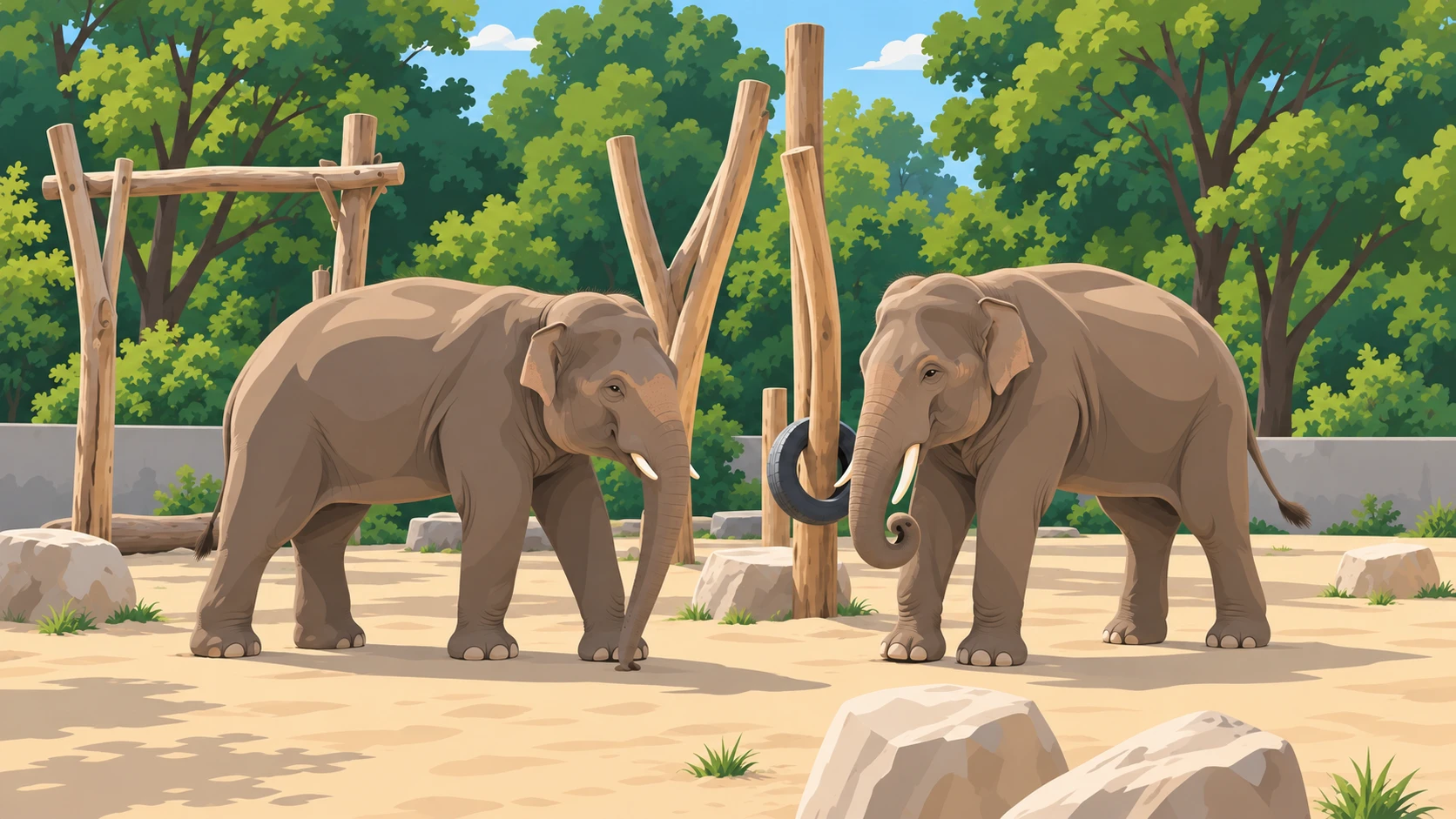
  6. Ilustracja Miejski Ogród Zoologiczny w Płocku6ZvířeAsian elephantThe trunk grasps, smells and sprays water, while females organise their lives around a family group.Kvíz
  7. Ilustracja Miejski Ogród Zoologiczny w Płocku7ZvířeMalayan tapirBlack-and-white colouring and a short trunk distinguish this resident of wet Asian forests.Kvíz
  8. Ilustracja Miejski Ogród Zoologiczny w Płocku8ZvířeAgile gibbonLong arms, family life and daytime activity in the canopy of Asian forests.Kvíz
  9. Ilustracja Miejski Ogród Zoologiczny w Płocku9ZvířeAmur tigerThis striped, solitary cat from Far Eastern forests hunts by ambush and swims well.Kvíz
  10. Ilustracja Miejski Ogród Zoologiczny w Płocku10ZvířeSnow leopardA long tail, broad paws and thick fur equip this cat for life in rocky mountains.Kvíz
Podrobnosti
Autor nebo původ
Live Story - propozycja redakcyjna