

Point of interest
Imperial Palace
Charles IV’s rooms and a palace enlarged as the castle towers changed function.
Content language
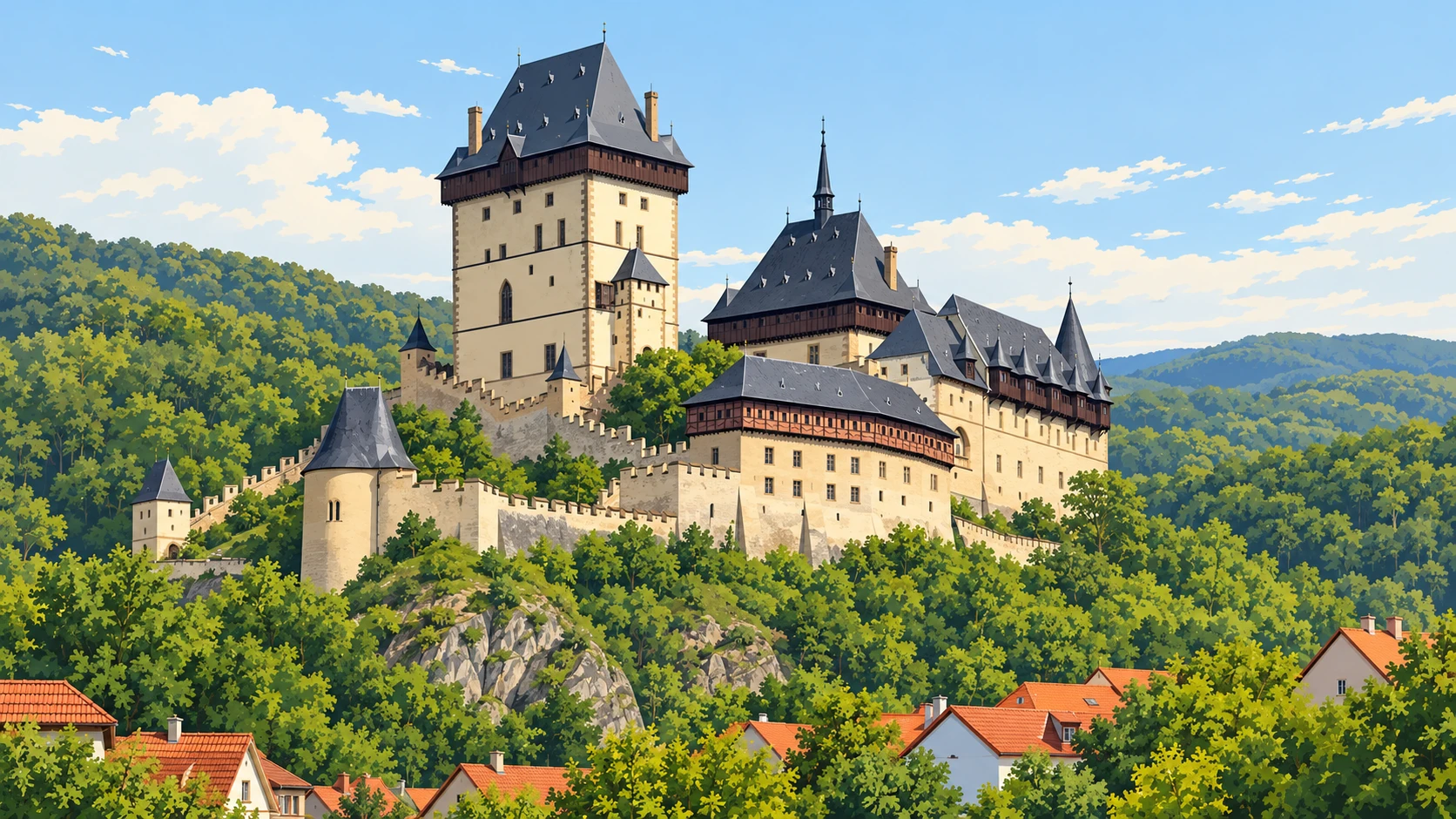
The Imperial Palace contained Charles IV’s private and ceremonial rooms. Its original part, with one upper storey and the tower of St Nicholas, was usable by 1355, when the emperor was already staying at Karlštejn. Converting the two great towers into places for relics and jewels changed domestic arrangements: the palace took over the residential functions originally planned for them.
Work on the arcaded extension and the northern deanery wing may have begun around 1370; it took place no later than the reign of Wenceslas IV, who also used the residence. The palace now has five levels, and the basic tour visits rooms on two floors. It connects court rooms, the bedchamber, the Audience Hall and ceremonial interiors, exploring the residential part of the fortified seat. Furnishings in the accessible rooms date from the fourteenth to nineteenth centuries. They are therefore not a single set of objects left by the emperor.
After the Hussite wars, the palace gained a timber-framed upper floor and an adjoining stair tower. Renaissance rebuilding under Rudolf II in 1579-1597 also affected the castle façades: they received sgraffito decoration, made by exposing layers of plaster. The building’s present walls and divisions reflect successive works, rather than the fourteenth-century design alone.
For children
Charles IV lived and received guests in the Imperial Palace. Its oldest part was ready for use by 1355. The palace later needed enlarging. Chapels and treasuries were being created in the towers, so the accommodation planned there moved into the palace.
Today the building has five levels. The basic tour takes you through two floors: court rooms, a bedchamber and rooms where the ruler received other people. The furnishings come from different centuries, from the fourteenth to the nineteenth. Not everything you see therefore dates from Charles IV’s lifetime.
Question 1 of 2