

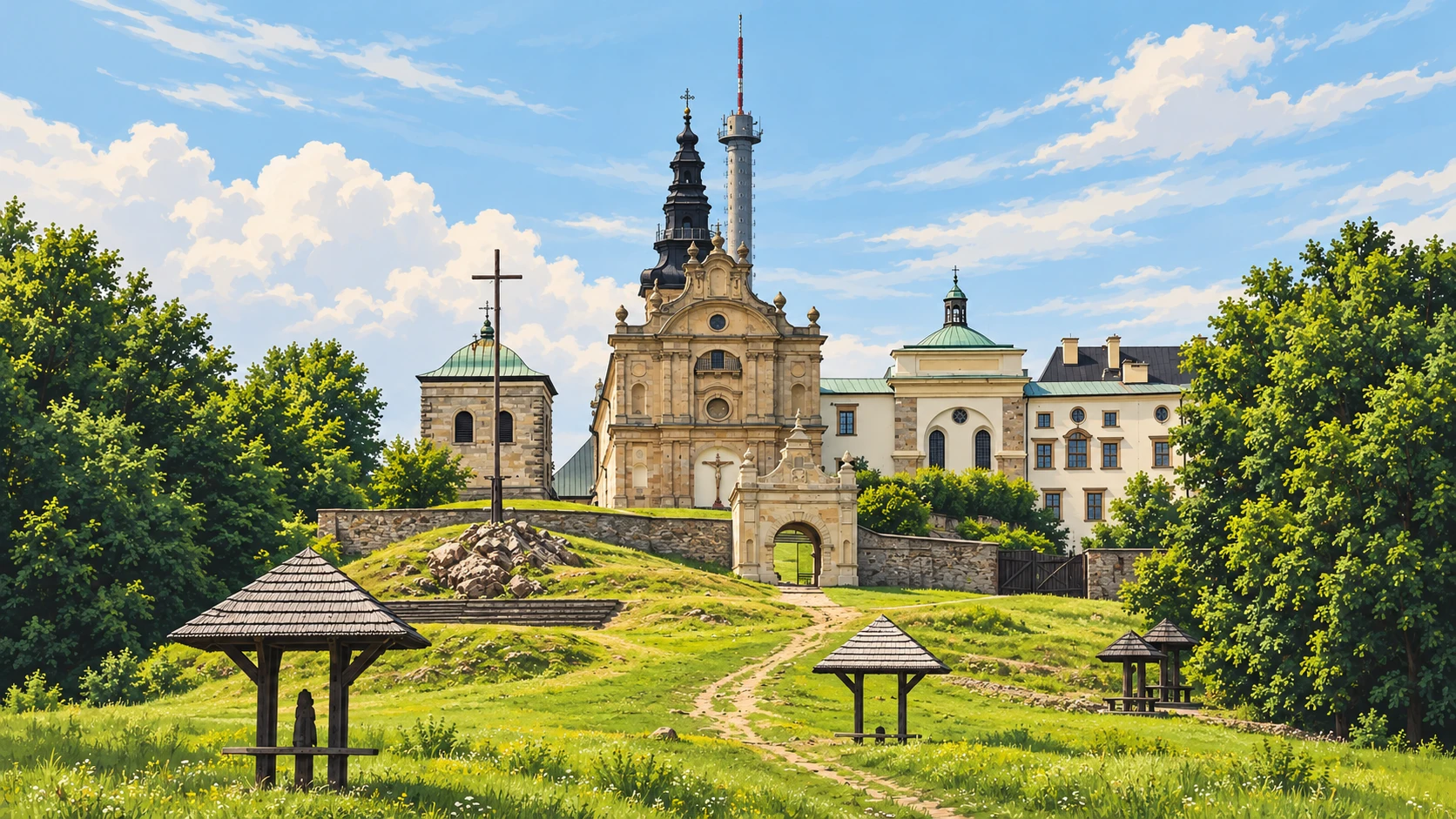
Lugar sagrado · early 14th century (relics); chapel completed 1620; relics in the chapel since 1723
The Oleśnicki Chapel with the relics of the Holy Cross
The relics of the Wood of the Holy Cross, given to the Benedictines in the early 14th century, have been kept in the baroque Oleśnicki Chapel since 1723.
Idioma del contenido
The relics of the Wood of the Holy Cross gave their name to the abbey and to the whole mountain. The Benedictines received them from Duke Władysław the Elbow-high in the early 14th century. A legend links their arrival with the Hungarian prince Emeric. From the 15th century, as the fame of the relics drew pilgrims, people began to speak of the Holy Cross rather than of the Abbey of the Holy Trinity.
Since 1723 the relics have been kept in the baroque Oleśnicki Chapel. The chapel was founded by Mikołaj Oleśnicki and completed in 1620. Its interior is decorated with an 18th-century polychrome showing scenes from the life of Saint Benedict, patron of the order, which guarded the relics until the abbey was dissolved in 1819. The entrance is adorned with marble portal elements, and the relics are displayed in a reliquary in the chapel. The chapel holds a 17th-century tomb of the Oleśnicki family, and the crypt beneath it contains remains held to be those of Prince Jeremi Wiśniowiecki.
The relics also drew kings to the summit: Władysław Jagiełło came here on pilgrimage seven times, and Casimir IV Jagiellon ten times. The Oleśnicki Chapel remains both the home of the relics and a memorial to its founders, whose tomb survives inside.
Pregunta 1 de 2
Which ruler gave the relics of the Holy Cross to the Benedictines?
- Número de inventario
- PKT-SWK-05
- relics
- Wood of the Holy Cross
- Oleśnicki Chapel
- baroque
- Władysław the Elbow-high