
Punto de interés · 1102-1138
Remains of the Romanesque church
A surviving section of Romanesque masonry recalls the Benedictines’ first church and the abbey’s foundation by Bolesław Wrymouth.
Idioma del contenido
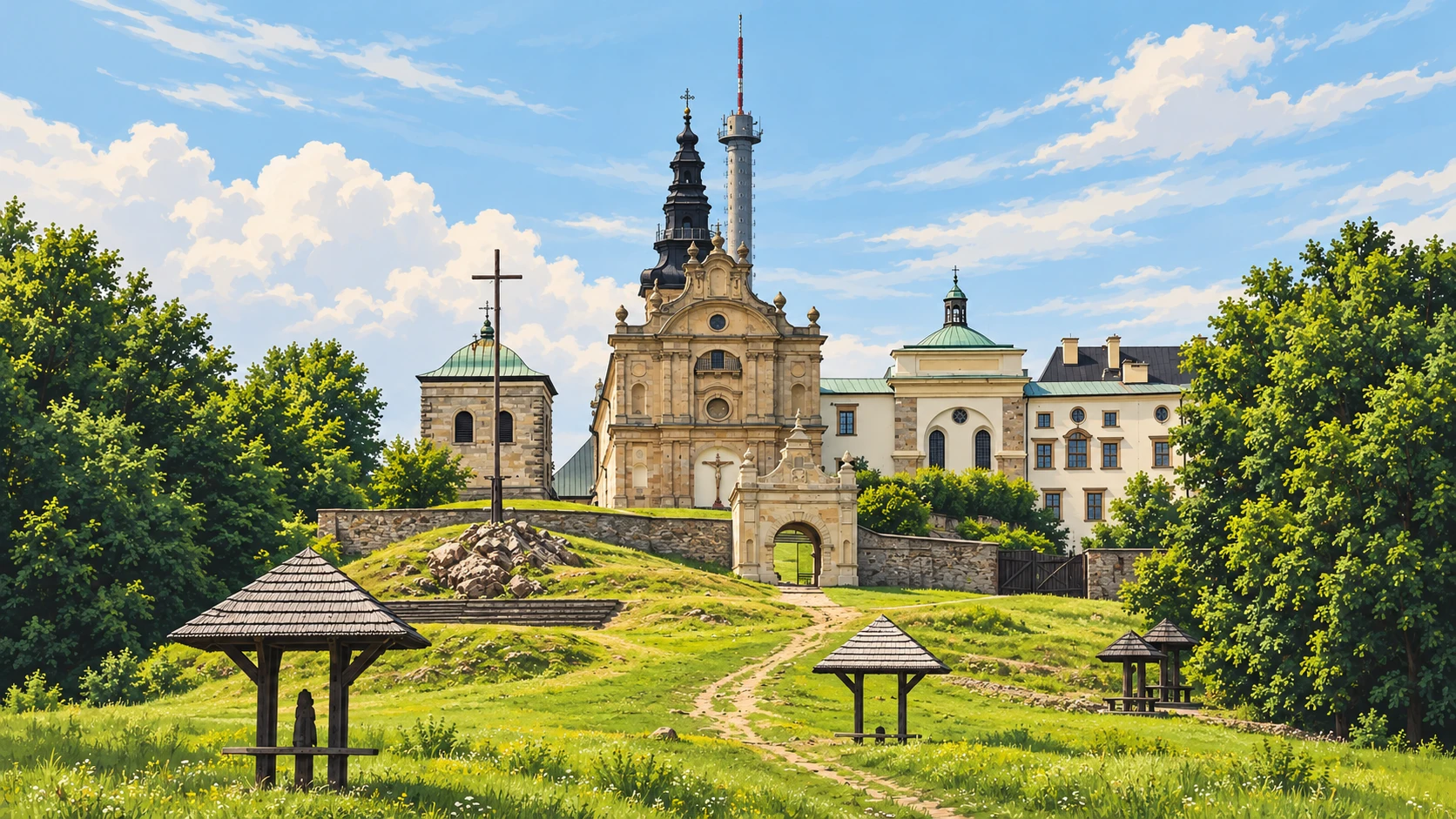
A section of Romanesque masonry survives in the north wall of the present church, facing the cloisters. Modern historians attribute the founding of the monastery and the Romanesque church on Łysa Góra to Bolesław Wrymouth, between 1102 and 1138. Its first hosts, the Benedictines, dedicated the church to the Holy Trinity. The monastery rose on a summit ringed by pre-Christian stone ramparts, which are now protected together with the abbey as a heritage site.
An old tradition, repeated among others by the chronicler Jan Długosz, pushed the founding back to the year 1006 and the reign of Bolesław the Brave. A document of 1427 names Duke Bolesław and the knight Wojsław as founders. The founder's name even turned up in the walls themselves: when the old church was demolished in the 18th century, coins inscribed "Boleslaus" were found in its foundations.
From the 15th century, once the relics had made the abbey famous, the name Holy Cross replaced the dedication to the Holy Trinity. The Benedictines ran the summit until the abbey was dissolved in 1819.
The monastery was destroyed many times: Tatars raided it in 1241 and 1260, Lithuanians plundered it in 1370, and in 1655 Swedish troops looted the church and killed the monks. Each time the monks rebuilt the abbey on the summit of Łysa Góra.
Pregunta 1 de 2
Which ruler, according to modern historians, founded the abbey on Łysa Góra?
- Ubicación
- North wall of the church, facing the cloisters · Basilica of the Holy Trinity
- Número de inventario
- PKT-SWK-01
- Benedictines
- Bolesław Wrymouth
- Romanesque
- founding
- Łysa Góra