
Tematikus útvonal
Ten ways of living
From Marta’s film story through treetops and coastlines to cool forests and high mountains.
A tartalom nyelve
- IndulásMarta the alligator
The walk begins with Marta the alligator, whose life links the zoo's history with Hydrozagadka. At the next stop, the sloth shifts attention from a screen role to anatomy: its claws support a life beneath branches. Penguins then demonstrate wings working underwater, while giraffes reach for plant food high above the ground.
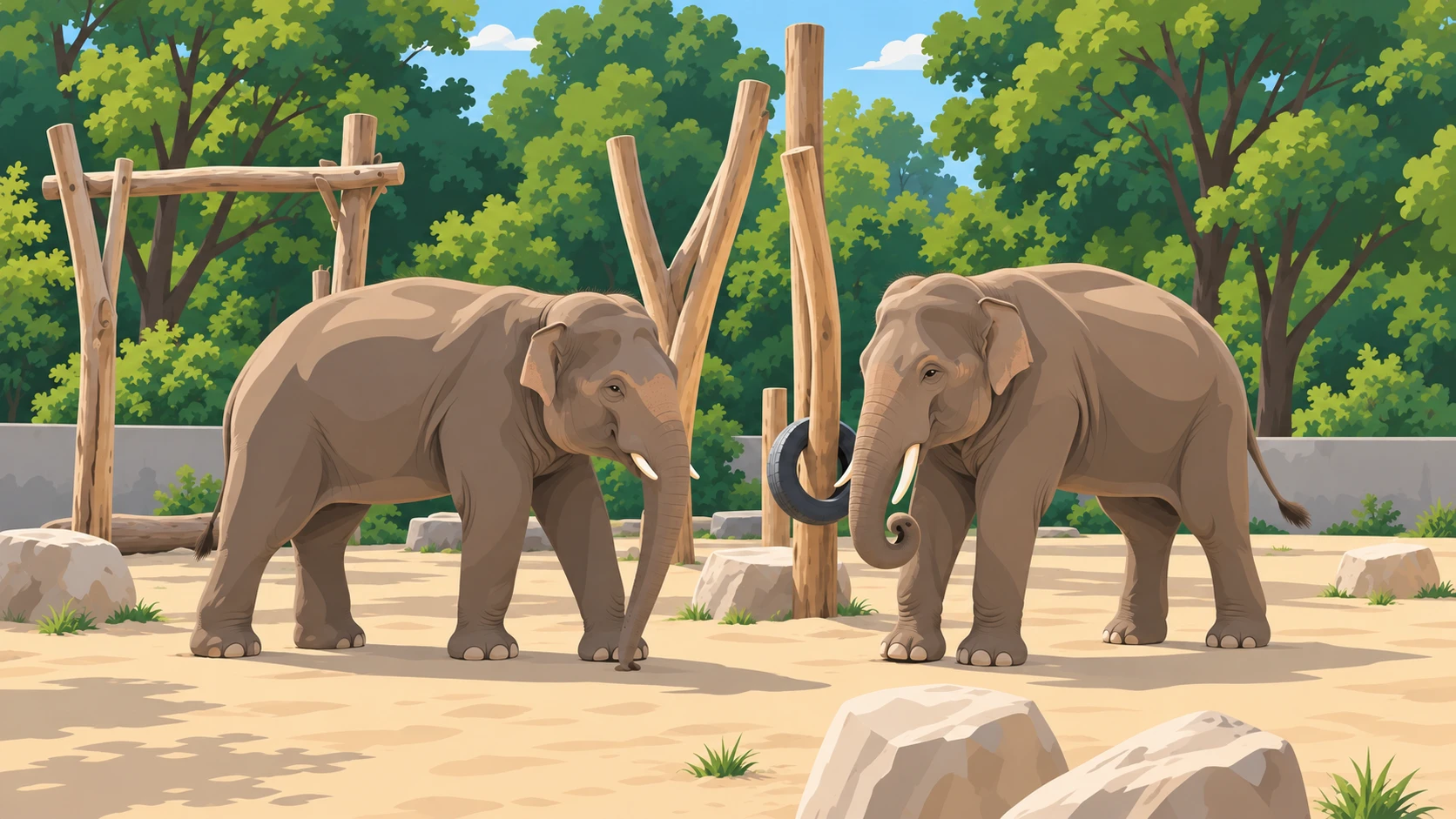
The red panda introduces precise grasping and climbing. At the elephant and tapir stops, two different trunks reveal two ways of gathering plants. The gibbon takes the story back into the canopy, this time through the life of a day-active member of a forest family.
The final two stops belong to cats: the Amur tiger and the snow leopard. Far Eastern forests and rocky mountains demand different adaptations. The route connects ten animals through the question of how body shape, food and habitat influence daily life.
Gyerekeknek
First you meet Marta, an alligator with a film role. Then a sloth shows why it has curved claws, a penguin reveals what wings can do underwater, and a giraffe introduces feeding on leaves high above the ground.
The next animals have unusual ways of grasping things. A red panda uses a special grip beside its paw. Elephants and tapirs use trunks, although their sizes are very different. At the gibbon stop, the story returns to the treetops, where long arms help with movement.
Two cats finish the walk: an Amur tiger and a snow leopard. One lives in forests and the other in mountains. Each of the ten stops presents a different set of animal tools, from claws and wings to a tongue, a trunk and a warm tail.
- Szerző vagy eredet
- Live Story - propozycja redakcyjna