
Wrocław, dolnośląskie
Muzeum Przyrodnicze Uniwersytetu Wrocławskiego
Four natural history displays and historic university specimens, from a blue whale to plants, shells and insects.
A követéssel hozzájárulsz a hely e-mailes és push értesítéseihez. A két csatornát külön kikapcsolhatod a beállításokban.
A tartalom nyelve
Muzeum Przyrodnicze Uniwersytetu Wrocławskiego
The Natural History Museum of the University of Wrocław presents animals, plants and skeletal anatomy in four permanent exhibitions. “The World of Animals” arranges more than 1,500 exhibits by zoological group. They include a 14.6-metre skeleton of a young blue whale and preserved specimens of extinct species, including the thylacine.
“Vertebrate Skeletons” brings together 66 complete skeletons and skulls. The giant deer and aurochs introduce animals that have disappeared from nature. “The World of Plants” draws on the university Herbarium and presents nearly 500 species. “Insects and Humans” covers pests, beneficial insects and their adaptations.
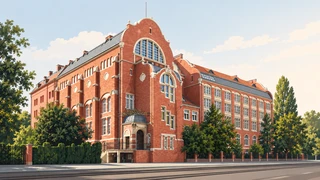
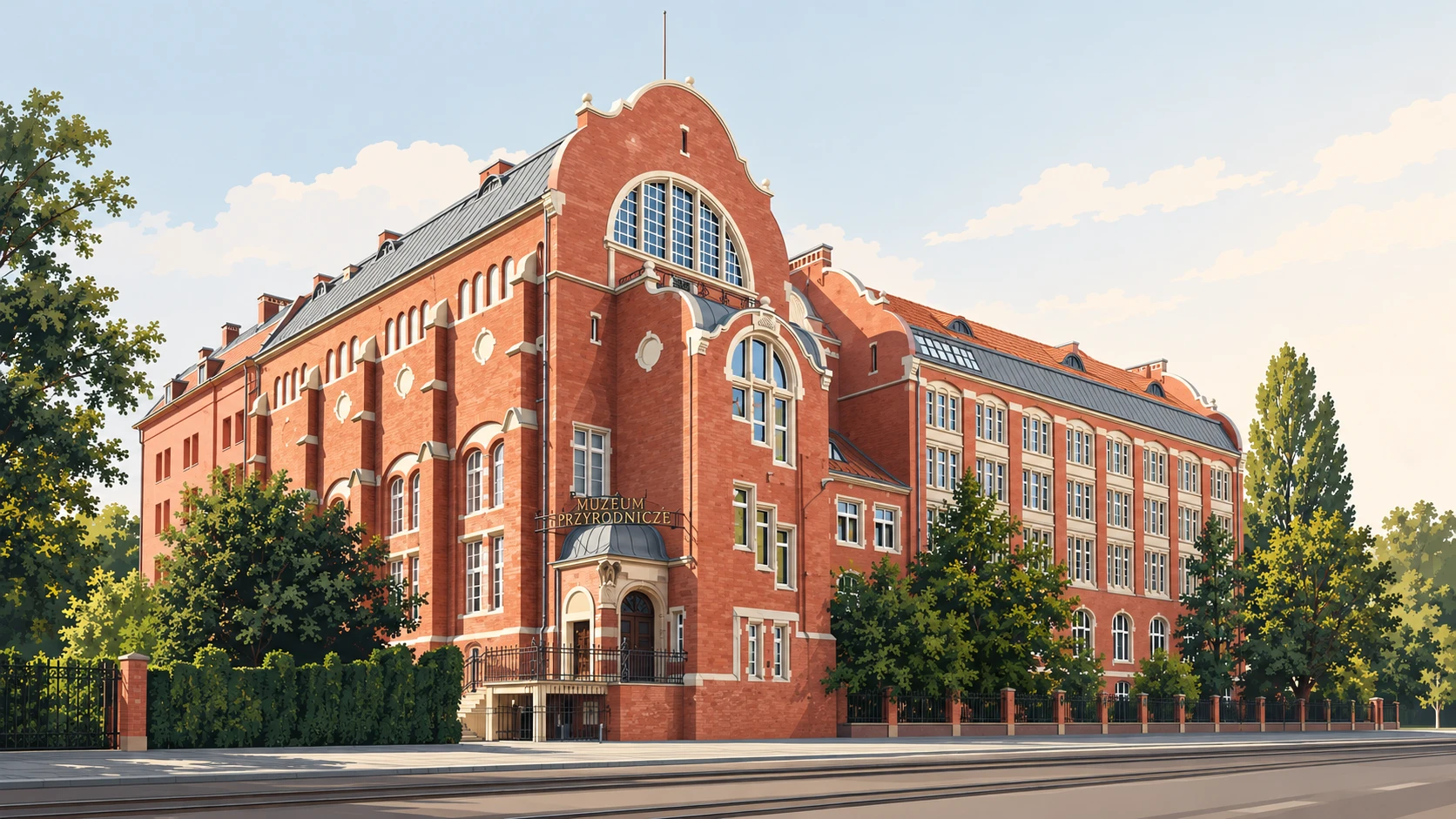
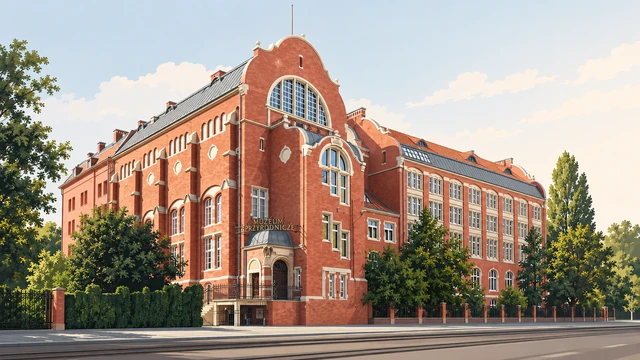
The zoological collections trace their origins to the museum founded in 1814 by Johann Ludwig Christian Gravenhorst. In 1904, the collections moved into the building on today’s Sienkiewicza Street. The building and exhibitions suffered severe damage during the Second World War. Polish university staff secured the surviving collections after the war. Today’s displays combine historic specimens with explanations of the diversity and structure of organisms.
Gyerekeknek
The Natural History Museum brings together very large and very small animals. The skeleton of a young blue whale is 14.6 metres long. Display cases contain birds, shells and insects. Some of the species shown, such as the thylacine, are extinct.
The four exhibitions have different themes. “The World of Animals” arranges animals in groups. “Vertebrate Skeletons” shows skeletons and skulls. “The World of Plants” contains specimens from the university Herbarium, a collection of plant material. “Insects and Humans” explains which insects help people, which cause damage, and how their bodies are built.
The zoological collections began in 1814 and moved to the present building in 1904. After the destruction of the Second World War, university staff worked to protect the surviving collections. The museum preserves specimens gathered by generations of researchers.
A hely hírei
Hírek betöltése…
Nyitvatartás
- hétfő
- Zárva
- kedd
- 09:00–16:30
- szerda
- 09:00–16:30
- csütörtök
- 09:00–16:30
- péntek
- 09:00–16:30
- szombat
- 10:00–17:30
- vasárnap
- 10:00–17:30
Kivételek
- 2026. január 1.Museum closed
- Zárva
- 2026. január 6.Museum closed
- Zárva
- 2026. április 5.Museum closed
- Zárva
- 2026. április 6.Museum closed
- Zárva
- 2026. május 1.Museum closed
- Zárva
- 2026. május 3.Museum closed
- Zárva
- 2026. június 4.Museum closed
- Zárva
- 2026. június 7.Museum closed
- Zárva
- 2026. augusztus 15.Museum closed
- Zárva
- 2026. november 1.Museum closed
- Zárva
- 2026. november 11.Museum closed
- Zárva
- 2026. december 24.Museum closed
- Zárva
- 2026. december 25.Museum closed
- Zárva
- 2026. december 26.Museum closed
- Zárva
The ticket office closes at 16:00 Tuesday-Friday and at 17:00 on Saturdays and Sundays, 30 minutes before the museum. In 2026, the museum is also closed on 1 and 6 January, 5 and 6 April, 1 and 3 May, 4 and 7 June, 15 August, 1 and 11 November, and 24-26 December. Groups are asked to book in advance. Guided tours require prior arrangements by phone or email.
Admission
- Standard ticket
- 18,00 PLN
- Reduced ticket
- 14,00 PLN
- Family ticket: 2 adults and 1-3 children
- 40,00 PLN
Guided tour (additional charge)
- Group of 1-10
- 50,00 PLN
- Group of 11-20
- 75,00 PLN
- Group of 21-30
- 100,00 PLN
Payment by cash or card. Pre-booked groups may pay by bank transfer by prior arrangement. Reduced admission: children over 4, school and university students with ID, and pensioners up to 75 with ID. Free admission: children up to 4, pensioners over 75, UWr students with ID, UWr staff with proof of employment, and teachers or group supervisors (1 per 10 visitors). Guiding fees are additional to admission; groups exceeding 30 are split. Admission does not include the separate Museum of Man.
Cím
ul. Sienkiewicza 2150-335 Wrocław
Visitors with reduced mobility enter through the porter’s entrance beside the main entrance, behind the gate in the steel fence. A lift connects the floors. Assistance dogs are permitted under the museum rules. Parents or guardians are responsible for minors. Exhibits and display cases must not be touched.