
Látnivaló
Benedictine Convent
Unfinished plans for a vast monastery and successive religious communities shaped these buildings.
A tartalom nyelve
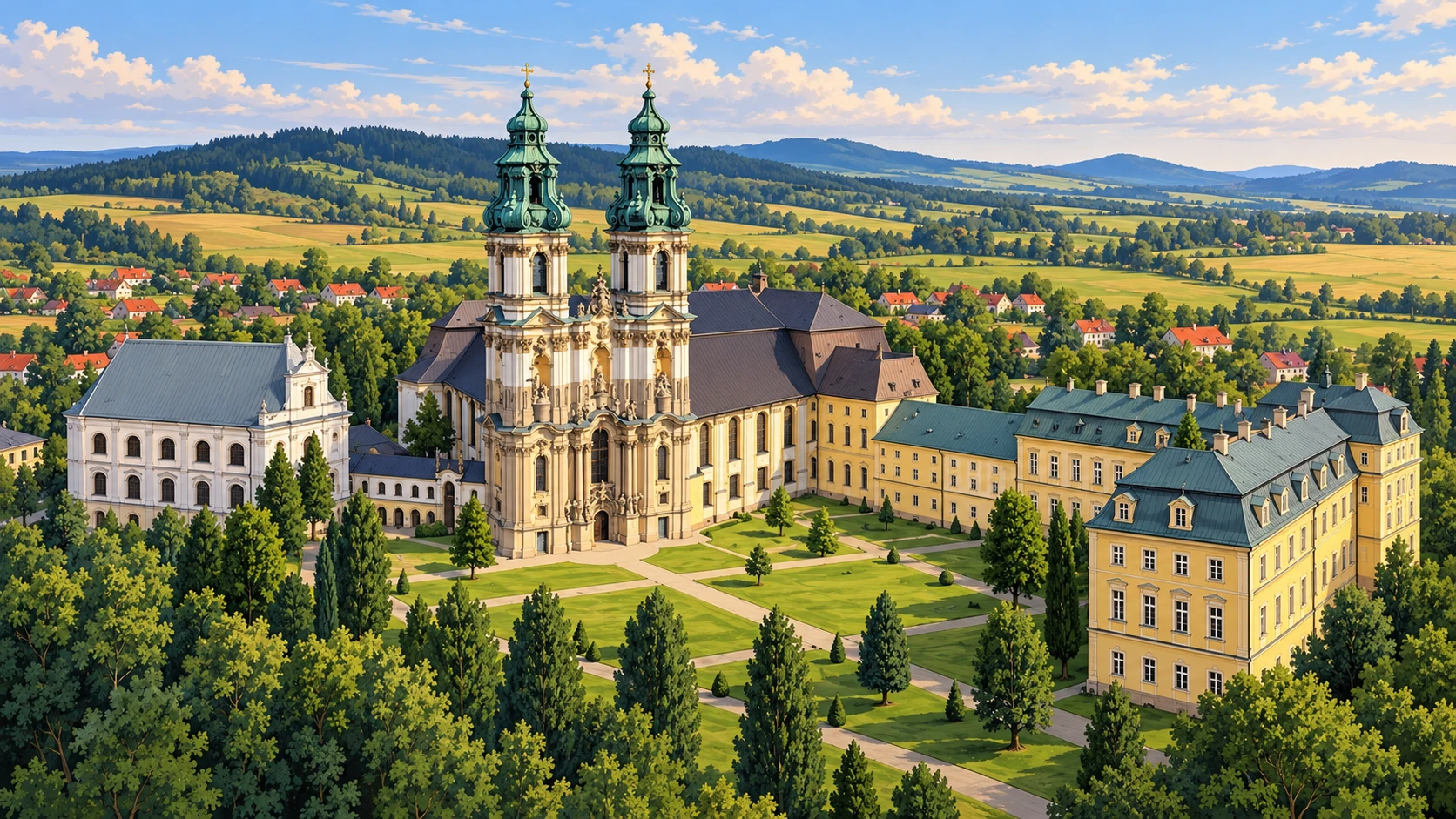
The present convent is the surviving part of much larger building ambitions. The first Baroque design proposed four wings, but only a section containing the sacristy was completed. The Silesian Wars interrupted further work. Afterwards, a new scheme was chosen, incorporating forms associated with Prussian Rococo.
The southern wing was built in 1774-1782 to a design by Johann Gottlieb Feller. Johann Rudolph then connected the new building to the older Gothic part in 1788-1792. Instead of replacing the monastery entirely, the works created a complex combining different periods. Heavy Prussian taxation and, ultimately, the suppression of the order prevented completion of the whole scheme.
The communities living here also changed. Other monks and nuns followed the Cistercians. In 1919 Benedictine monks arrived from Prague’s Emmaus Abbey. They remained until May 1946, when they were expelled to Bad Wimpfen.
Later that same month, Benedictine nuns arrived from Lviv. Their community still lives here. The convent therefore remains a religious home, with a history encompassing both unrealised architectural plans and the displacement of communities during the twentieth century.
Gyerekeknek
The monastery was intended to be much larger. Architects planned four wings, but wars interrupted construction. Only a small part of the first design was completed, including the sacristy, a room used to prepare for services.
The plans later changed. The southern wing was built from 1774 to 1782 to Johann Gottlieb Feller’s design. A few years later, Johann Rudolph connected it to the older Gothic section. The full project was never finished because of costs, taxes and the Prussian authorities’ suppression of the order.
Different religious communities lived in the buildings. Benedictine monks arrived from Prague in 1919 and had to leave in May 1946. That same month, Benedictine nuns from Lviv moved in. Their community still lives here, so these buildings serve everyday religious life as well as preserving history.
Kérdés: 1/2