
Zvíře
Red panda
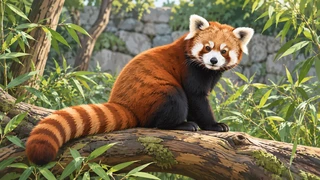
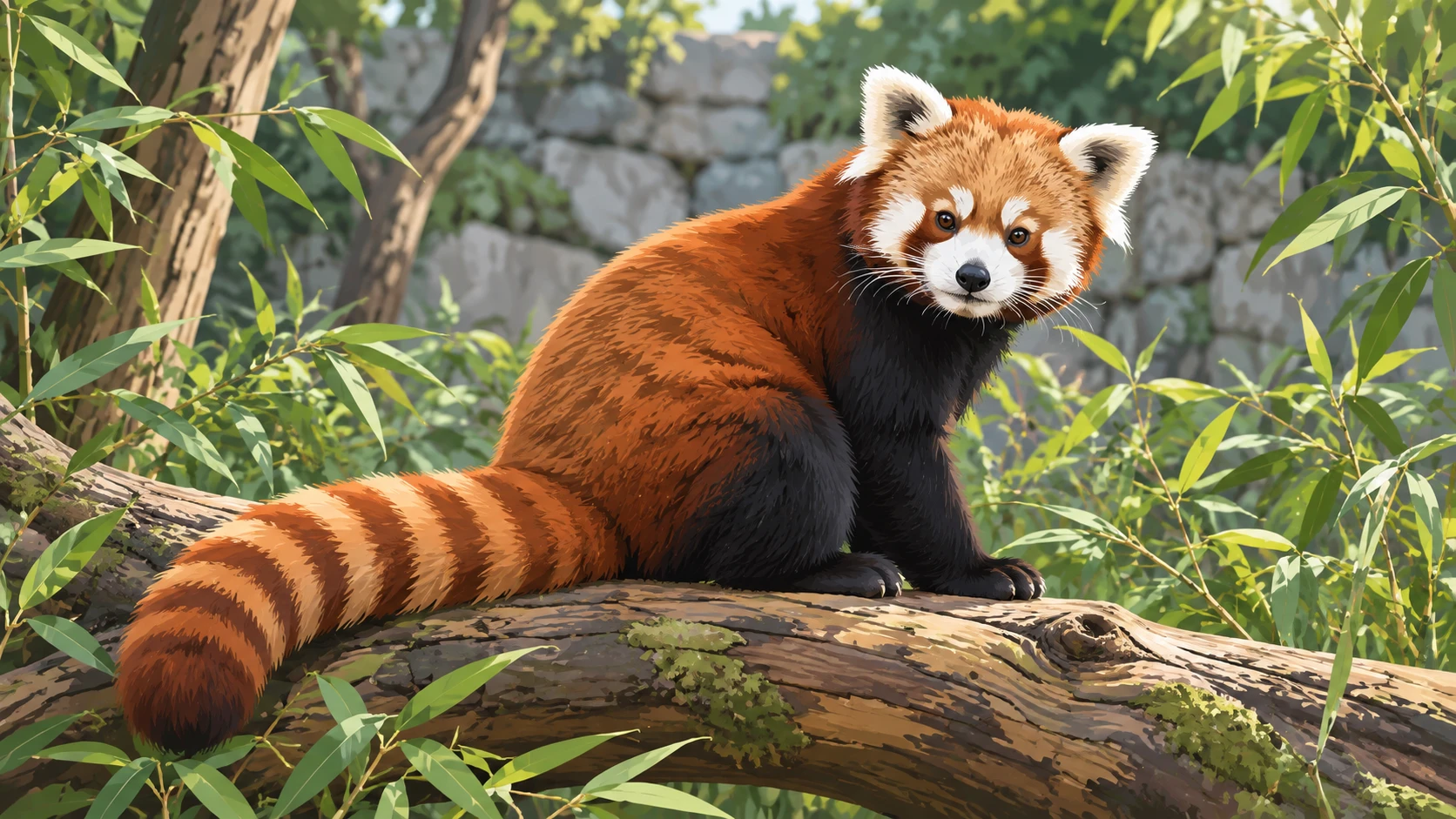
An inhabitant of Asian mountain forests with bamboo leaves as an important part of its diet.
Jazyk obsahu
A hollow tree or a rocky crevice can become the birthplace of a red panda. In a nest sheltered there, the female gives birth to between one and four young after a pregnancy of about 135 days. Such refuges occur in its natural habitat: deciduous and coniferous forests in southern China, India, Nepal and northern Myanmar. Red pandas live in the mountains, at elevations of up to 4,800 metres.
Their diet includes bamboo leaves and berries, but also insects, birds' eggs and small vertebrates. Bamboo is important without being their only food. Red pandas are nocturnal, so a daytime visit may not coincide with their busiest hours. The species is included in the European EEP breeding programme. Kraków Zoo's first red panda cub was born on 25 June 2022: a female named Bona following a naming competition.
Pro děti
Among the mountain trees lives an unusual animal: the red panda. Wild red pandas inhabit Asian forests, including those of Nepal, India and southern China. They live high in the mountains, at up to 4,800 metres. Both deciduous trees and conifers grow in their surroundings.
Red pandas eat bamboo leaves and berries, but also insects, birds' eggs and small animals. They are most active at night. To give birth, a female uses a nest in a hollow tree or a rocky crevice. After about 135 days of pregnancy, between one and four cubs are born. Kraków's first red panda cub arrived on 25 June 2022. She was named Bona in a competition. European zoos cooperate in breeding red pandas through the EEP programme.
Otázka 1 z 2