
Thematic route
Main route: ten ways of life
From big cats through primates and dry-country animals to the ibis and the owl of the tundra.
Content language
- Starts atAfrican lion
The route begins with the African lion, whose pride introduces cooperation. The next two cats, the leopard and the jaguar, show different strategies: solitary hunting, using trees and moving confidently through water. Similar predator bodies conceal different behaviours and relationships with their surroundings.
Ring-tailed lemurs, mandrills and cotton-top tamarins then shift the focus to primates. This section moves from scent signals and shared resting to carrying food in cheek pouches and travelling among branches. It compares animals that differ markedly in size, colour and ways of communicating.
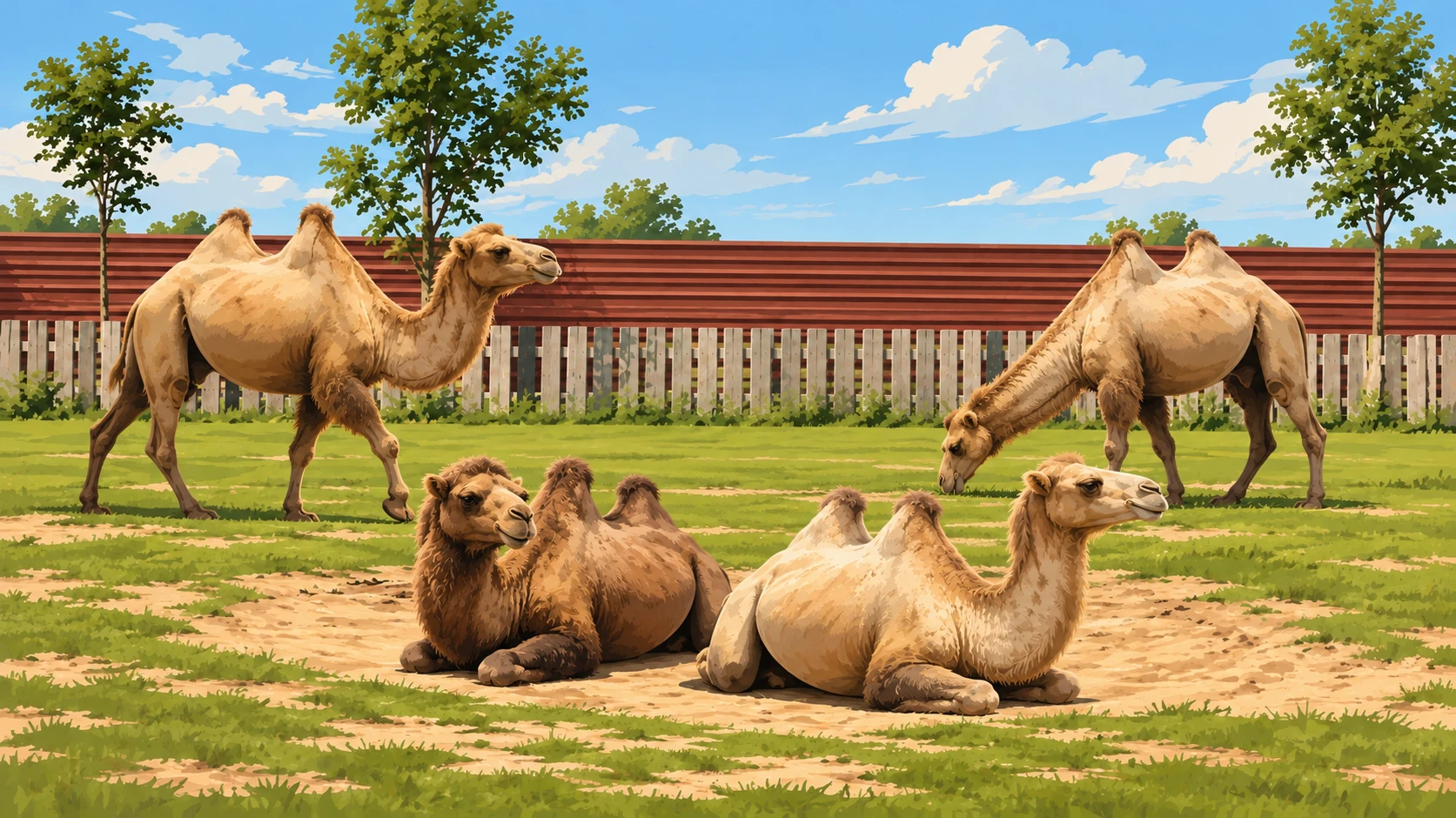
At the red kangaroo and Bactrian camel, body structure and dry habitats become the main themes. A tail that stabilises a leap, a young animal growing in a pouch, fat stored in humps and protection from sand offer distinct solutions. The final two stops are the scarlet ibis and snowy owl. The journey ends by moving from shallow water and mud to tundra, an owl’s daytime hunting and the thick feathers covering its legs.
For children
First you meet the lion, which lives in a pride. Then the leopard shows how useful trees can be, and the jaguar introduces a cat that swims very well. These are three different ways of life for large predators.
Next come the ring-tailed lemur, mandrill and tamarin, with a striped tail, a colourful face and a white crest. These animals also introduce smells, sounds and cheeks that can carry a meal.
The kangaroo and camel follow: one has a tail that helps it hop and a pouch for its young; the other has humps storing fat. Two birds complete the route. The ibis searches mud with its bill, while the snowy owl can hunt in daylight. Ten stops take you from a lion pride to a bird of the cold tundra.
- Author or origin
- Live Story - propozycja redakcyjna