
Point of interest
Main shelter of Fort No. 9
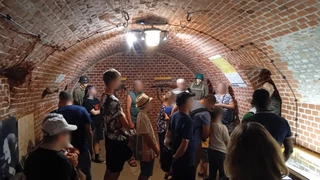
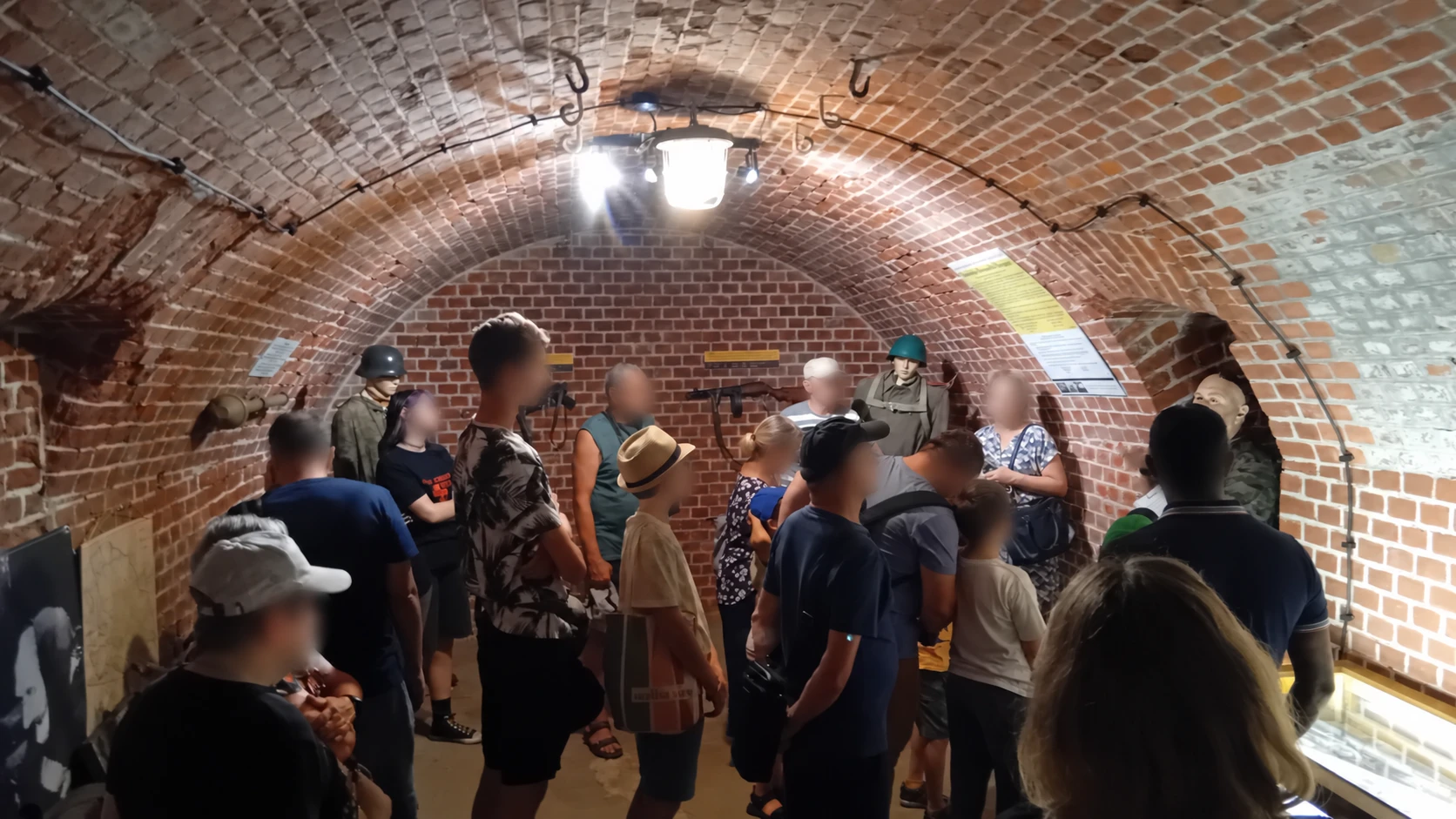
Former soldiers’ rooms, corridors and shelter walls now house the museum.
Content language
Six soldiers’ rooms and two corridors form the interior of the main shelter at Fort No. 9. The casemates, protected rooms within a fortification, belonged to the military structure. Six entrances led into the shelter. Its construction combines brick and concrete, and its repeated arrangement of rooms reflects its original purpose as accommodation and protection for soldiers.
Construction of the fort is dated to 1892. It formed part of the ring of defences around Wrocław. Today, the shelter displays objects connected with the city’s military history. The exhibitions occupy the original interiors, so visitors encounter both the collection and the historic fortification itself.
In 2014, the site was taken over by the Jedynka Foundation for Social and Cultural Initiatives. The neglected fort underwent several years of restoration, supported by the city and other donors. Conversion into a museum brought visitors back into the shelter. Concrete guardhouses also belong to the complex beyond the main building.
Allow around 30-40 minutes for the exhibition in the shelter alone, excluding the outdoor courtyard. On Saturdays, the shelter is also accessible during independent visits. It can be visited before or after the outdoor collection.
For children
This shelter was built for soldiers. Inside were six rooms and two corridors, with six entrances leading into the building. It was made of brick and concrete. A “casemate” is a protected room within an old fortification.
Fort No. 9 formed part of a larger belt of defences around Wrocław. It was built in the nineteenth century, long before the present museum. Its rooms now contain objects that tell the story of the city’s military past. The building itself is historic too: its layout shows how space was arranged for the soldiers stationed here.
The Jedynka Foundation took responsibility for the fort in 2014. Several years of work followed to restore the neglected site, with help from the city and donors. Rooms once used by soldiers became places for learning about history.
Allow around 30-40 minutes for the exhibition in the shelter alone, excluding the outdoor courtyard. On Saturdays, the shelter is also accessible during independent visits. It can be visited before or after the outdoor collection.
Question 1 of 2