
Point of interest · 1742-1793
Prussian expansion of the fortress
Walrave’s plan encompassed two hills and underground passages; successive engineers expanded the system.
Content language
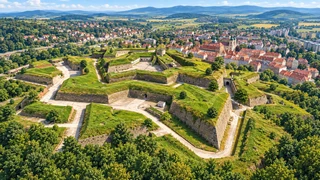
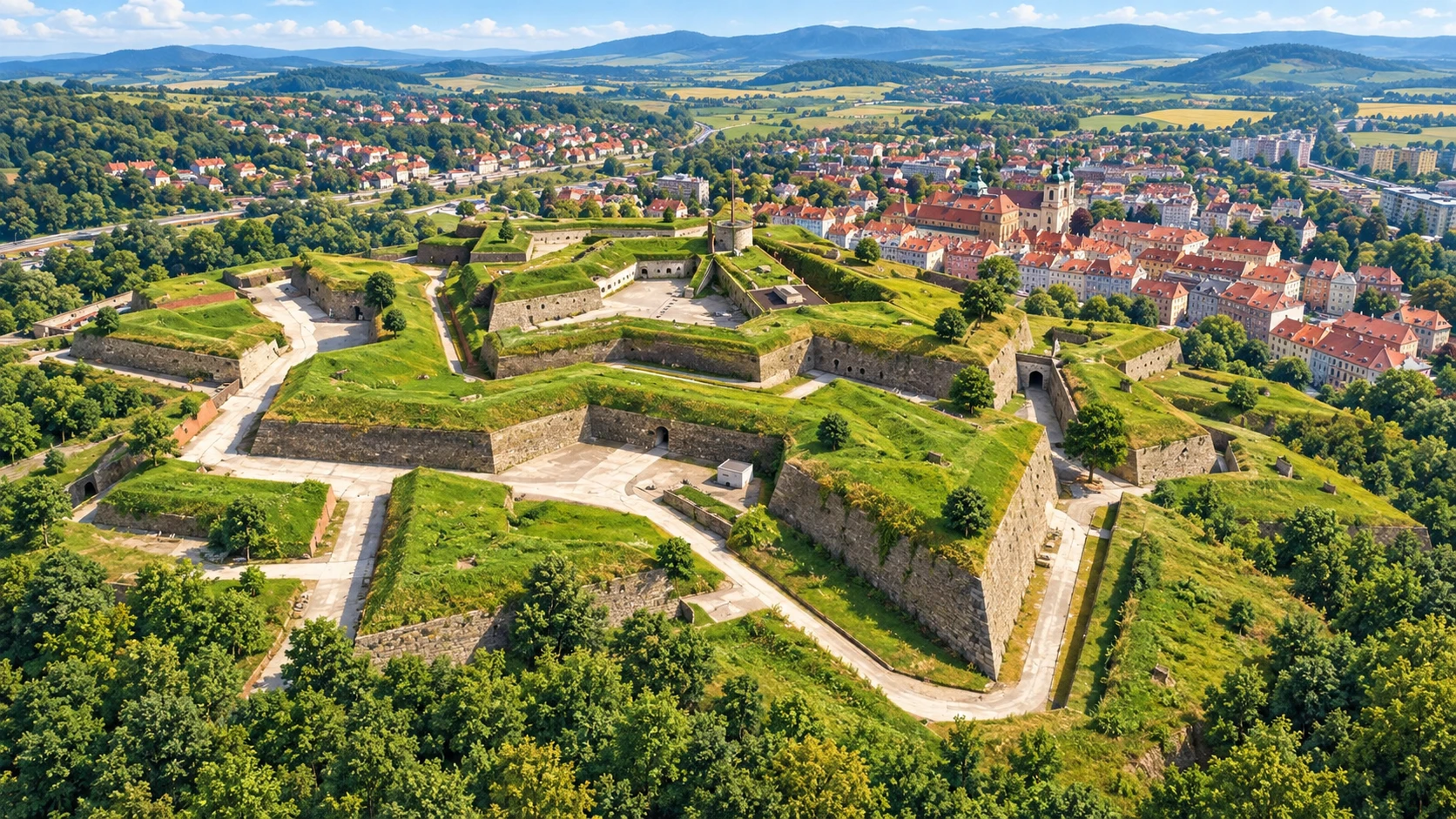
The fortress passed to Prussia on 20 April 1742. Frederick II incorporated it into the defences of conquered Silesia, and its redevelopment was intended to strengthen control over the roads through Kłodzko. General Gerhard Cornelius von Walrave prepared expansion plans in 1743. They covered the Main Fortress, the new Owcza Góra Fort across the Nysa Kłodzka valley, and mining and counter-mine tunnels.
Two lines of fortifications crossed the valley to connect the fortified hills. A bridge and a sluice capable of raising the river level were built between them in 1749-1751. The Great Pincers were constructed during the 18th century, and Żuraw Redoubt was completed in 1756. Successive projects changed both the interior of the fortress and its outlying defences. Colonel Ludwig von Regler, also associated with Srebrna Góra Fortress, directed later work. An inner defensive enclosure with the Donjon replaced the demolished castle, following a design by Count von Pinto. Work on the underground passages continued in 1790-1793. The fortress’s present layout is the result of several phases, rather than a single plan executed by one builder.
Question 1 of 2
Who prepared the fortress expansion plans in 1743?
- Reference
- PKT-TK-02
- Prussia
- Frederick the Great
- fortifications
- 18th century
- defensive architecture